
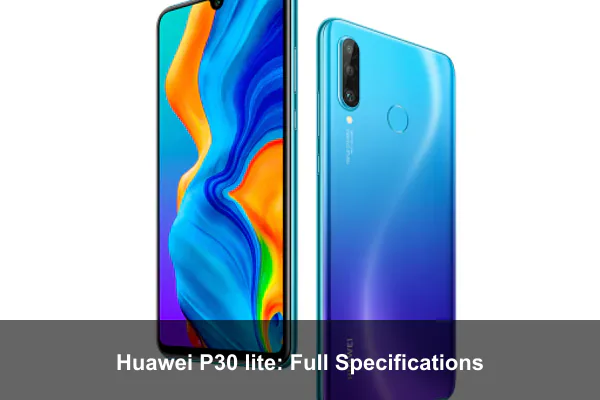
The Huawei P30 lite arrived in early 2019 as the accessible member of the company’s flagship P30 family, pairing a glass-sandwich design and a roomy 6.15-inch display with mid-range internals. Announced on March 27 and released April 25, 2019, it launched at roughly 420 EUR and aimed squarely at buyers who wanted premium looks and a capable triple camera without paying flagship money.
Although it is now a discontinued model, the P30 lite remains a useful reference point for anyone studying how Huawei balanced style, photography, and battery endurance in its 2019 lineup. Built around the Kirin 710 chipset and offered in a wide range of memory configurations, it tells a clear story about value-focused engineering. This breakdown walks through what the phone gets right and where its age shows.
Full Specifications
Network
| Technology: | GSM / HSPA / LTE |
| 2G bands: | GSM 850 / 900 / 1800 / 1900 |
| 3G bands: | HSDPA 850 / 900 / 1700(AWS) / 1900 / 2100 – Europe, Canada |
| HSDPA 850 / 900 / 1900 / 2100 – Asia | |
| 4G bands: | 1, 3, 4, 7, 8, 20, 38 – Europe |
| 1, 3, 5, 7, 8, 28, 34, 38, 39, 40, 41 – Asia | |
| 1, 2, 3, 4, 5, 7, 8, 12, 17, 28, 66 – Canada | |
| Speed: | HSPA 42.2/5.76 Mbps, LTE (2CA) Cat6 400/50 Mbps |
Launch
| Announced: | 2019, March 27. Released 2019, April 25 |
| Status: | Discontinued |
Body
| Dimensions: | 152.9 x 72.7 x 7.4 mm (6.02 x 2.86 x 0.29 in) |
| Weight: | 159 g (5.61 oz) |
| Build: | Glass front, glass back, plastic frame |
| SIM: | Nano-SIMNano-SIM + Nano-SIM |
Display
| Type: | IPS LCD |
| Size: | 6.15 inches, 93.6 cm2 (~84.2% screen-to-body ratio) |
| Resolution: | 1080 x 2312 pixels, 19.3:9 ratio (~415 ppi density) |
Platform
| OS: | Android 9.0 (Pie), upgradable to Android 10, EMUI 10.0 |
| Chipset: | Kirin 710 (12 nm) |
| CPU: | Octa-core (4×2.2 GHz Cortex-A73 & 4×1.7 GHz Cortex-A53) |
| GPU: | Mali-G51 MP4 |
Memory
| Card slot: | microSDXC (uses shared SIM slot) |
| Internal: | 64GB 4GB RAM, 128GB 4GB RAM, 128GB 6GB RAM, 128GB 8GB RAM, 256GB 4GB RAM, 256GB 6GB RAM |
| eMMC 5.1 |
Main Camera
| Triple: | 48 MP, f/1.8, 27mm (wide), 1/2.0″, 0.8µm, PDAF 8 MP, 17mm (ultrawide) 2 MP, f/2.4, (depth) or 24 MP, f/1.8, (wide), PDAF 8 MP, 17mm (ultrawide) 2 MP, f/2.4, (depth) |
| Features: | LED flash, HDR, panorama |
| Video: | 1080p@30fps (gyro-EIS) |
Selfie camera
| Single: | 24 MP, f/2.0, 26mm (wide), 1/2.8″, 0.9µm or 32 MP, f/2.0, 26mm (wide), 1/2.8″, 0.8µm |
| Features: | Panorama |
| Video: | 1080p@30fps |
Sound
| Loudspeaker: | Yes |
| 3.5mm jack: | Yes |
Comms
| WLAN: | Wi-Fi 802.11 a/b/g/n/ac, dual-band, Wi-Fi Direct |
| Bluetooth: | 4.2, A2DP, LE, aptX HD |
| Positioning: | GPS, GLONASS, BDS |
| NFC: | Yes – MAR-L21MEA, MAR-LX1M only |
| Radio: | FM radio (market dependent) |
| USB: | USB Type-C 2.0, OTG |
Features
| Sensors: | Fingerprint (rear-mounted), accelerometer, gyro, proximity, compass |
Battery
| Type: | Li-Po 3340 mAh, non-removable |
| Charging: | 18W wired |
Misc
| Colors: | Peacock Blue, Midnight Black, Pearl White |
| Models: | MAR-LX1M, MAR-AL00, MAR-TL00, MAR-LX2, Marie-L21A, Marie-L01A, Marie-L21MEA, Marie-L22A, MAR-LX1A, MAR-LX3A, MAR-LX2J, MAR-LX1B, MAR-LX3Bm, MAR-LX3Am |
| Price: | About 420 EUR |
Our Tests
| Performance: | AnTuTu: 141600 (v7) GeekBench: 5549 (v4.4) GFXBench: 6.9fps (ES 3.1 onscreen) |
| Display: | 1231:1 contrast ratio, 501 nits max brightness (measured) |
| Camera: | Photo / Video |
| Loudspeaker: | Voice 71dB / Noise 73dB / Ring 83dB |
| Audio quality: | Noise -94.4dB / Crosstalk -71.2dB |
| Battery (old): | Endurance rating 94h |
Price and Availability
The Huawei P30 lite offers a compelling combination of features and performance. While the base price is around €420, the actual cost may vary depending on your location and retailer. Below, you’ll find the approximate price of the Huawei P30 lite converted into various currencies. Please note that these are estimates based on recent exchange rates as of June 14, 2026 and may not reflect the exact price you’ll find at a retailer.
- United States: $486
- Japan: ¥77,850
- United Kingdom: £363
- Australia: A$690
- Canada: C$679
- Taiwan: NT$15,356
- Denmark: kr3.134
- Saudi Arabia: ﷼1,822
- South Korea: ₩738,753
- Germany: €420
- Brazil: R$2.477
- Vietnam: ₫12.681.340
- Kenya: KSh 62,904
- India: ₹46,257
- Indonesia: Rp 8.683.734
- Nigeria: ₦654,643
- Pakistan: ₨135,260
- Philippines: ₱29,540
- Bangladesh: ৳৫৯,৭৪১
Why Should You Buy the Huawei P30 lite?
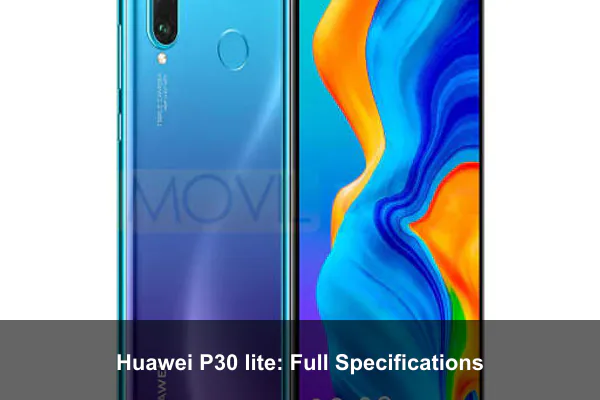
The P30 lite is built for the value-minded buyer who wants flagship aesthetics on a mid-range budget. At its launch price of around 420 EUR, it offered a glass front and back, a high-resolution display, and a versatile triple camera that punched above its weight for the price bracket. Even today, as a discontinued device, it represents a sensible secondary phone or a low-cost entry into Huawei’s ecosystem, provided you can live with its software limitations.
Its broadest appeal lies in the unusually wide spread of memory options, from 64GB with 4GB of RAM up to 256GB with 6GB. That flexibility meant shoppers could match the phone to their budget rather than being forced into a single tier, a rare luxury in the affordable segment.
Design and Build Quality
Measuring 152.9 x 72.7 x 7.4 mm and weighing just 159 g, the P30 lite is slim and comfortable to hold for extended periods. Huawei wrapped it in glass on both the front and back, with a plastic frame holding everything together. The result looks far more expensive than the price suggests, with color options including Peacock Blue, Midnight Black, and Pearl White that catch the light attractively.
The compact footprint and light weight make it easy to use one-handed, and the dewdrop notch keeps the front clean. The trade-off for the glossy glass back is fingerprint smudges, and the plastic frame, while practical, reveals the phone’s budget roots up close.
Display Experience
The 6.15-inch IPS LCD panel delivers a 1080 x 2312 resolution at a 19.3:9 ratio, working out to a sharp 415 ppi density. With an 84.2% screen-to-body ratio, the front is dominated by the display, making it well suited to streaming, browsing, and reading. Text looks crisp and content fills the tall canvas neatly.
Our measurements put peak brightness at 501 nits with a 1231:1 contrast ratio. That brightness is adequate indoors and in moderate light, though it can struggle under direct sunlight. As an LCD rather than OLED, blacks are not as deep as on pricier rivals, but color reproduction is pleasant and consistent.
Performance and Software
Power comes from the 12 nm Kirin 710 chipset, with an octa-core CPU pairing four 2.2 GHz Cortex-A73 cores with four 1.7 GHz Cortex-A53 cores, backed by the Mali-G51 MP4 GPU. In benchmarks the phone returned an AnTuTu score of 141,600 (v7) and a GFXBench result of 6.9fps, figures that confirm its mid-range positioning. Everyday tasks like messaging, social media, and light multitasking run smoothly, especially on the higher-RAM variants.
The phone shipped on Android 9.0 Pie with EMUI 9, later upgradable to Android 10 with EMUI 10.0. That is where its age is felt most: it predates Google Mobile Services restrictions on this particular model in most regions, but it will not see further updates, so security-conscious buyers should weigh that carefully.
Camera Capabilities
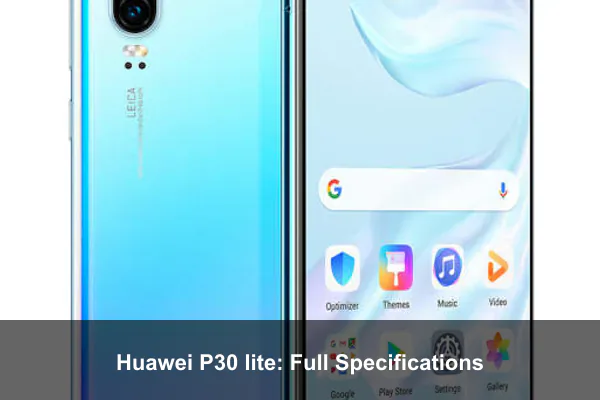
The rear triple-camera system is the headline feature for the money. Depending on the variant, the main sensor is either a 48 MP or 24 MP f/1.8 wide shooter with PDAF, joined by an 8 MP ultrawide and a 2 MP depth sensor. In good light the main camera captures detailed, vibrant images, and the ultrawide adds compositional flexibility for landscapes and group shots. Features include LED flash, HDR, and panorama.
For selfies, Huawei fitted either a 24 MP or 32 MP f/2.0 front camera, which is generous for the segment and produces clean, sharp portraits. Video tops out at 1080p at 30fps with gyro-EIS stabilization on the rear, which keeps clips steady but lacks 4K, a reasonable omission at this price.
Battery and Charging
A 3340 mAh Li-Po battery keeps the lights on, earning an endurance rating of 94 hours in our older testing. For a phone with an efficient 12 nm chip and an LCD screen, that translates to comfortable all-day use for most people, with lighter users stretching into a second day. The capacity is modest by modern standards but well matched to the hardware it powers.
Charging is handled at 18W over the USB Type-C 2.0 port, which was competitive in 2019 and remains acceptable today. There is no wireless charging, and the battery is non-removable, but the inclusion of a 3.5mm headphone jack and FM radio adds practical value that many newer phones have dropped.
Connectivity and Extras
Connectivity covers the essentials with LTE Cat6 speeds up to 400/50 Mbps, dual-band Wi-Fi 802.11ac, Bluetooth 4.2 with aptX HD, and GPS, GLONASS, and BDS positioning. NFC is present only on select models, so buyers who want contactless payments should verify the exact model number. A rear-mounted fingerprint sensor handles security, accompanied by the usual accelerometer, gyro, proximity, and compass sensors.
Storage can be expanded via microSDXC, though it shares the second SIM slot, forcing a choice between dual-SIM use and extra storage. The hybrid tray is a common compromise in this class.
Who Should Buy It?
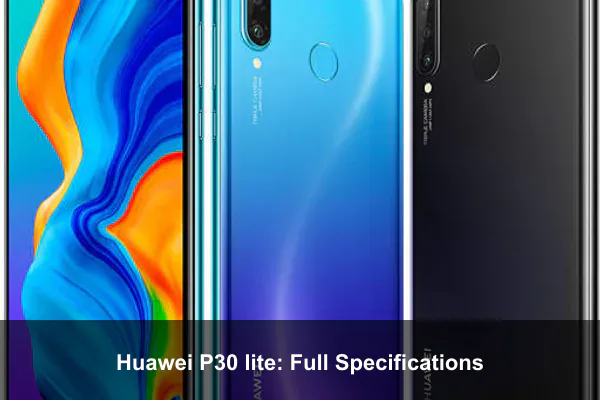
The P30 lite makes the most sense as an affordable, stylish daily driver for users who prioritize design, a clean display, and flexible camera framing over cutting-edge performance or long-term software support. Compared with similarly priced rivals of its era, it stood out for its premium glass build and generous selfie camera, making it a smart pick for social media enthusiasts on a budget.
Conclusion
The Huawei P30 lite remains a well-rounded mid-ranger that delivered flagship styling, a versatile triple camera, and dependable battery life at an approachable 420 EUR price. Its main caveats are its now-frozen software, modest brightness, and the absence of NFC on some variants. If you want an attractive, lightweight phone for everyday use and value design and photography over raw speed, the P30 lite is still a sensible recommendation, especially as a secondary or budget-conscious choice.
