
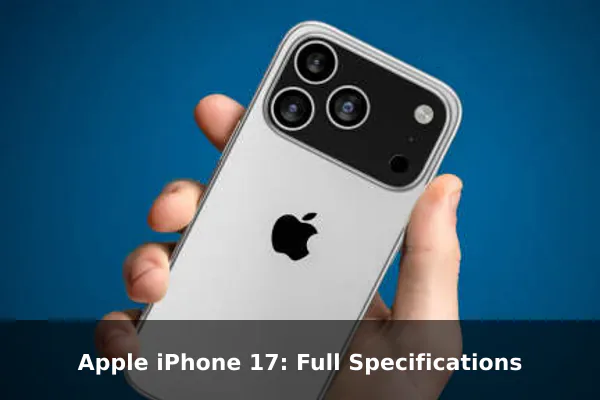
Apple iPhone 17 is the standard model in Apple’s iPhone 17 generation, aimed at buyers who want the latest core iPhone experience without moving to a Pro model. It brings a 6.3-inch Super Retina XDR OLED display, iOS 26, the Apple A19 platform, 5G connectivity, and a dual rear camera setup centered on a 48 MP main camera.
The source listing does not provide an exact launch price, so pricing should be checked separately when local availability is confirmed. This article focuses on the phone’s specification profile, practical value, and how the regular iPhone 17 fits for everyday users, upgraders, and buyers comparing it with previous iPhones or Android flagships.
Full Specifications
Network
| Technology: | GSM / CDMA / HSPA / EVDO / LTE / 5G |
| 2G bands: | GSM 850 / 900 / 1800 / 1900 |
| CDMA 800 / 1900 | |
| 3G bands: | HSDPA 850 / 900 / 1700(AWS) / 1900 / 2100 |
| CDMA2000 1xEV-DO | |
| 4G bands: | LTE |
| 5G bands: | SA/NSA/Sub6 |
| SA/NSA/Sub6/mmWave | |
| Speed: | HSPA, LTE, 5G, EV-DO Rev.A 3.1 Mbps |
Launch
| Announced: | Not announced yet |
| Status: | Rumored |
Body
| Dimensions: | – |
| Weight: | – |
| Build: | Glass front, glass back, aluminum frame |
| SIM: | Nano-SIM + eSIM + eSIM (max 2 at a time; International)eSIM + eSIM (8 or more, max 2 at a time; USA)Nano-SIM + Nano-SIM (China) |
| IP68 dust tight and water resistant (immersible up to 6m for 30 min) Apple Pay (Visa, MasterCard, AMEX certified) |
Display
| Type: | LTPO Super Retina XDR OLED, 120Hz, HDR10, Dolby Vision |
| Size: | 6.3 inches, 97.2 cm2 |
| Resolution: | 1206 x 2622 pixels, 19.5:9 ratio (~458 ppi density) |
| Protection: | Ceramic Shield glass (2025 gen) |
Platform
| OS: | iOS 26 |
| Chipset: | Apple A19 (3 nm) |
| CPU: | Hexa-core |
| GPU: | Apple GPU (5-core graphics) |
Memory
| Card slot: | No |
| Internal: | 128GB 8GB RAM, 256GB 8GB RAM, 512GB 8GB RAM |
| NVMe |
Main Camera
| Dual: | 48 MP, f/1.6, 26mm (wide), 1/1.56″, 1.0µm, dual pixel PDAF, sensor-shift OIS 12 MP, f/2.2, 13mm, 120˚ (ultrawide), 0.7µm, dual pixel PDAF |
| Features: | Dual-LED dual-tone flash, HDR (photo/panorama) |
| Video: | 4K@24/25/30/60fps, 1080p@25/30/60/120/240fps, HDR, Dolby Vision HDR (up to 60fps), stereo sound rec. |
Selfie camera
| Single: | 12 MP, f/1.9, 23mm (wide), 1/3.6″, 1.0µm, PDAF SL 3D, (depth/biometrics sensor) |
| Features: | HDR, Dolby Vision HDR, 3D (spatial) audio, stereo sound rec. |
| Video: | 4K@24/25/30/60fps, 1080p@25/30/60/120fps, gyro-EIS |
Sound
| Loudspeaker: | Yes, with stereo speakers |
| 3.5mm jack: | No |
Comms
| WLAN: | Wi-Fi 802.11 a/b/g/n/ac/6/7, tri-band, hotspot |
| Bluetooth: | 5.3, A2DP, LE |
| Positioning: | GPS, GLONASS, GALILEO, BDS, QZSS |
| NFC: | Yes |
| Radio: | No |
| USB: | USB Type-C 2.0, DisplayPort |
Features
| Sensors: | Face ID, accelerometer, gyro, proximity, compass, barometer |
| Ultra Wideband (UWB) support (gen2 chip) Emergency SOS, Messages and Find My via satellite |
Battery
| Type: | Li-Ion |
| Charging: | Wired, PD2.0, 50% in 30 min 25W wireless (MagSafe), 15W wireless (China only) 15W wireless (Qi2) 4.5W reverse wired |
Misc
| Colors: | Black; other colors |
Why Should You Buy Apple iPhone 17?
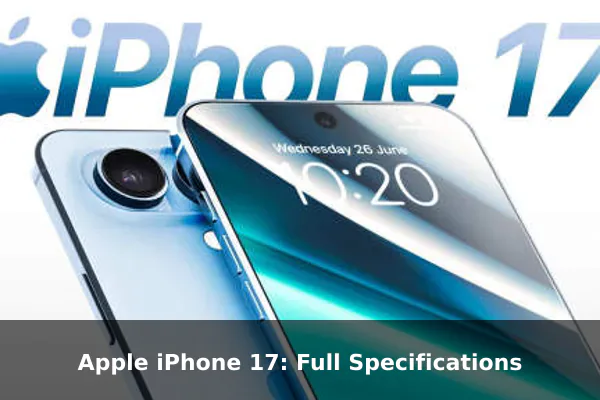
The strongest reason to consider the Apple iPhone 17 is balance. It is positioned as the mainstream iPhone rather than the most expensive camera or performance model, but the specification sheet still covers the features most people expect from a modern flagship: 5G, a premium OLED display, a current Apple chipset, strong video recording, Face ID, satellite safety features, and long-term iOS support.
For buyers coming from older models such as iPhone 11, iPhone 12, or iPhone 13, the jump should feel meaningful in display smoothness, camera processing, battery efficiency, and connectivity. The 120Hz LTPO Super Retina XDR OLED panel is especially important because high refresh rate is no longer just a Pro-only luxury in the wider smartphone market.
Design and Build Quality
The iPhone 17 keeps Apple’s familiar premium construction formula with a glass front, glass back, and aluminum frame. That combination gives it a lighter and more approachable character than heavier stainless steel or titanium Pro models, while still maintaining a flagship feel in the hand.
The listed IP68 rating is also important for daily durability. Dust resistance and water resistance up to 6 meters for 30 minutes give the phone practical protection against rain, splashes, and accidents, though water resistance is not a permanent condition and should not be treated as a reason to use the phone underwater regularly.
SIM support varies by region, with eSIM-focused options for some markets and dual Nano-SIM support listed for China. That makes it worth checking the exact regional model before buying, especially for travelers or users who rely on physical SIM cards.
Display Experience
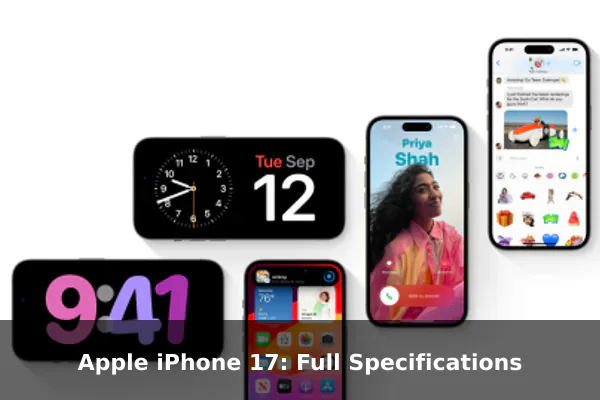
The 6.3-inch LTPO Super Retina XDR OLED display is one of the iPhone 17’s key upgrades. Its 120Hz refresh rate should make scrolling, animations, gaming interfaces, and general navigation feel smoother than older 60Hz iPhones. HDR10 and Dolby Vision support also help the phone serve as a strong pocket screen for streaming and recorded video playback.
The listed 1206 x 2622 pixel resolution at about 458 ppi is sharp enough that text, icons, and photos should look clean at normal viewing distances. Ceramic Shield glass adds another layer of protection, although a case and screen protector remain sensible for users who keep a phone for several years.
Performance and Storage
The Apple A19 chipset is listed as a 3 nm platform with a hexa-core CPU and a 5-core Apple GPU. In practical terms, this should give the iPhone 17 enough performance for demanding apps, high-quality gaming, 4K video capture, editing, and years of iOS updates.
The source lists 128GB, 256GB, and 512GB storage options, each paired with 8GB RAM. There is no microSD card slot, so storage choice matters at the time of purchase. Users who record a lot of 4K Dolby Vision video, download offline media, or keep large photo libraries should treat 256GB as the more comfortable starting point, while 512GB is the safer choice for heavy creators.
Camera Setup
The rear camera system is led by a 48 MP wide camera with sensor-shift optical image stabilization, dual pixel PDAF, and a bright f/1.6 aperture. That combination is useful for everyday photography because it targets sharp focus, steadier handheld shots, and better low-light results without requiring the user to think too much about settings.
The ultrawide camera is listed as a 12 MP sensor with a 120-degree field of view. It gives the iPhone 17 flexibility for landscapes, architecture, group photos, and close indoor scenes where stepping back is not possible. However, users who want dedicated long-range optical zoom should compare the regular iPhone 17 with Apple’s Pro models before deciding.
Video remains a major selling point. The listed rear video support includes 4K recording up to 60fps, Dolby Vision HDR, stereo sound recording, and high-frame-rate 1080p capture. That makes the phone well suited for social media clips, family video, travel footage, and casual creator work.
Selfie Camera and Face ID
The front camera listing includes a 12 MP wide camera with PDAF and an SL 3D depth and biometrics sensor. This matters because the front system is not only for selfies and video calls; it also powers Face ID, portrait effects, and depth-aware features across iOS.
Front video support is also strong, with 4K recording up to 60fps, Dolby Vision HDR, gyro-EIS, stereo sound recording, and 1080p slow-motion options. For users who record vlogs, calls, reels, or short-form video from the front camera, the iPhone 17 should remain a dependable option.
Battery and Charging
The source lists a Li-Ion battery with USB-C wired charging, PD2.0 support, MagSafe wireless charging, Qi2 wireless charging, and reverse wired charging. The 50 percent in 30 minutes wired charging claim is useful for daily top-ups, although the real result depends on adapter wattage, cable quality, battery temperature, and usage while charging.
MagSafe support remains a major ecosystem advantage. It allows aligned wireless charging and a wide range of magnetic accessories, from stands and wallets to car mounts. The listed 4.5W reverse wired charging is modest, but it can be useful for small accessories in a pinch.
Software, Connectivity, and Features
iOS 26 is listed as the operating system, giving the iPhone 17 access to Apple’s latest software layer, privacy features, app ecosystem, and long update cycle. For many buyers, software support is one of the biggest reasons to choose an iPhone over cheaper Android alternatives.
Connectivity is broad, with GSM, CDMA, HSPA, EVDO, LTE, and 5G listed, including SA and NSA 5G with Sub-6 and mmWave references. Wi-Fi 7, Bluetooth, NFC, GPS, GLONASS, GALILEO, BDS, QZSS, USB-C with DisplayPort, Ultra Wideband support, satellite Emergency SOS, satellite Messages, and Find My via satellite round out a very complete feature set.
As always, network band support can vary by model and region, so buyers importing the phone should verify carrier compatibility before purchasing. This is especially important for mmWave 5G, eSIM behavior, and dual-SIM support.
Who Should Buy This Phone?
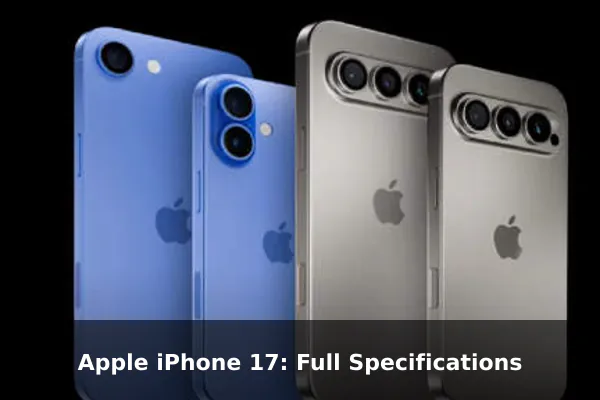
The Apple iPhone 17 is best for users who want a modern iPhone with a smoother display, strong cameras, current iOS software, and flagship connectivity without paying for the highest-end Pro hardware. It is a logical upgrade for owners of older standard iPhones who do not need a dedicated telephoto camera or the most advanced Pro video tools.
It is less ideal for users who prioritize the lowest possible price, expandable storage, a headphone jack, or open Android customization. It is also worth comparing against the iPhone 17 Pro if zoom photography, sustained gaming performance, and advanced camera hardware are top priorities.
Conclusion
Apple iPhone 17 looks like a strong mainstream flagship with a 120Hz OLED display, A19 performance, capable dual cameras, iOS 26, 5G, USB-C, MagSafe, and satellite safety features. With no exact source price available, the final value depends on local pricing and storage configuration, but it is easy to recommend for buyers who want the latest standard iPhone without stepping up to a Pro model.
References
- Apple iPhone 17 Technical Specifications – Primary source for official iPhone 17 dimensions, display, chip, cameras, battery claims, charging, wireless features, SIM support, and model-specific bands.
- Apple Newsroom: Apple debuts iPhone 17 – Official launch announcement confirming release timing, headline features, storage options, colors, availability dates, and Apple’s product positioning.
- Apple Support: Identify your iPhone model – Official reference for iPhone 17 model numbers, regional variants, colors, capacities, and identifying physical details.
- Apple iPhone Supported 5G and LTE Networks – Official country and model reference for supported 5G and LTE bands, useful for network compatibility sections.
- Apple Support: iPhone 17 Manuals and Downloads – Official hub for the iPhone 17 user guide, repair manual, and device information documents, useful for safety, regulatory, and hardware references.
