
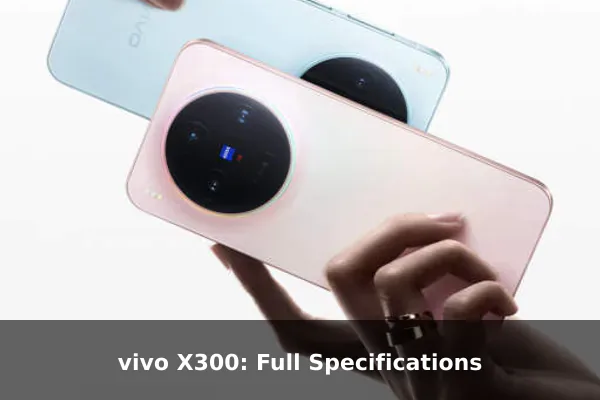
The vivo X300 is a compact flagship Android phone built around high-end imaging, a bright LTPO AMOLED screen, and MediaTek’s 3 nm Dimensity 9500 platform. It sits in the premium segment while keeping a smaller 6.31-inch footprint than many large-screen flagships.
This article focuses on the practical meaning of the vivo X300 specifications: display quality, camera flexibility, performance headroom, battery differences by region, connectivity, and who should consider it before the full specifications table.
Full Specifications
Network
| Technology: | GSM / HSPA / LTE / 5G |
| 2G bands: | GSM 850 / 900 / 1800 / 1900 |
| 3G bands: | HSDPA 850 / 900 / 1700(AWS) / 1900 / 2100 – International |
| HSDPA 850 / 900 / 2100 – Malaysia, India | |
| HSDPA 800 / 850 / 900 / 1700(AWS) / 1900 / 2100 – China | |
| 4G bands: | 1, 2, 3, 4, 5, 7, 8, 18, 19, 20, 25, 26, 28, 34, 38, 39, 40, 41, 42, 43, 48, 66 |
| 5G bands: | 1, 2, 3, 5, 7, 8, 18, 20, 25, 26, 28, 34, 38, 39, 40, 41, 48, 66, 77, 78 SA/NSA/Sub6 |
| Speed: | HSPA, LTE, 5G |
Launch
| Announced: | 2025, October 13 |
| Status: | Available. Released 2025, October 17 |
Body
| Dimensions: | 150.6 x 71.9 x 8 mm (5.93 x 2.83 x 0.31 in) |
| Weight: | 190 g (6.70 oz) |
| Build: | Glass front, aluminum alloy frame, glass back |
| SIM: | · Nano-SIM + Nano-SIM + eSIM (max 2 at a time) – International· Nano-SIM + Nano-SIM – China |
| IP68/IP69 dust tight and water resistant (high pressure water jets; immersible up to 1.5m for 30 min) |
Display
| Type: | LTPO AMOLED, 1B colors, 120Hz, 2160Hz PWM, HDR10+, HDR Vivid, 4500 nits (peak) |
| Size: | 6.31 inches, 98.0 cm2 (~90.5% screen-to-body ratio) |
| Resolution: | 1216 x 2640 pixels, 19.5:9 ratio (~460 ppi density) |
| Protection: | Reinforced Glass, Mohs level 4 |
| Ultra HDR image support |
Platform
| OS: | Android 16, up to 5 major Android upgrades, OriginOS 6 |
| Chipset: | Mediatek Dimensity 9500 (3 nm) |
| CPU: | Octa-core (1×4.21 GHz C1-Ultra & 3×3.5 GHz C1-Premium & 4×2.7 GHz C1-Pro) |
| GPU: | Arm G1-Ultra |
Memory
| Card slot: | No |
| Internal: | 256GB 12GB RAM, 256GB 16GB RAM, 512GB 12GB RAM, 512GB 16GB RAM, 1TB 16GB RAM |
| UFS 4.1 |
Main Camera
| Triple: | 200 MP, f/1.7, 23mm (wide), 1/1.4″, 0.56µm, PDAF, OIS 50 MP, f/2.6, 70mm (periscope telephoto), 1/1.95″, PDAF, OIS, 3x optical zoom 50 MP, f/2.0, 15mm, 119˚ (ultrawide), 1/2.76″, 0.64µm, AF |
| Features: | Laser AF, Zeiss optics, Zeiss T* lens coating, LED flash, panorama, HDR, 3D LUT import |
| Video: | 4K@30/60/120fps, 1080p@30/60/120/240fps, gyro-EIS, 4K@120fps HDR |
Selfie camera
| Single: | 50 MP, f/2.0, 20mm (wide), 1/2.76″, 0.64µm, AF |
| Features: | HDR |
| Video: | 4K@30/60fps, 1080p@30/60fps |
Sound
| Loudspeaker: | Yes, with stereo speakers |
| 3.5mm jack: | No |
Comms
| WLAN: | Wi-Fi 802.11 a/b/g/n/ac/6/7, dual-band |
| Bluetooth: | 5.4, A2DP, LE, aptX HD, LHDC 5 |
| Positioning: | GPS (L1+L5), GLONASS (L1), BDS (B1I+B1c+B2a+B2b), GALILEO (E1+E5a+E5b), QZSS (L1+L5), NavIC (L5) |
| NFC: | Yes |
| Infrared port: | Yes |
| Radio: | No |
| USB: | USB Type-C 3.2, OTG |
Features
| Sensors: | Fingerprint (under display, ultrasonic), accelerometer, gyro, proximity, compass |
Battery
| Type: | · Si/C Li-Ion 6040 mAh (Global)· Si/C Li-Ion 5360 mAh (EU markets) |
| Charging: | 90W wired 40W wireless Reverse wired |
Misc
| Colors: | Phantom Black, Mist Blue, Summit Red, Iris Purple, Halo Pink |
| Models: | V2515, V2509A |
| Price: | € 949.35 / ₹ 75,999 |
Our Tests
| Performance: | AnTuTu: 2346352 (v10), 3416530 (v11) GeekBench: 9843 (v6) 3DMark: 7510 (Wild Life Extreme) |
| Display: | 1930 nits max brightness (measured) |
| Loudspeaker: | -24.8 LUFS (Very good) |
| Battery: | Active use score 17:31h |
EU LABEL
| Energy: | Class A |
| Battery: | 52:15h endurance, 1200 cycles |
| Free fall: | Class B (180 falls) |
| Repairability: | Class C |
Price and Availability
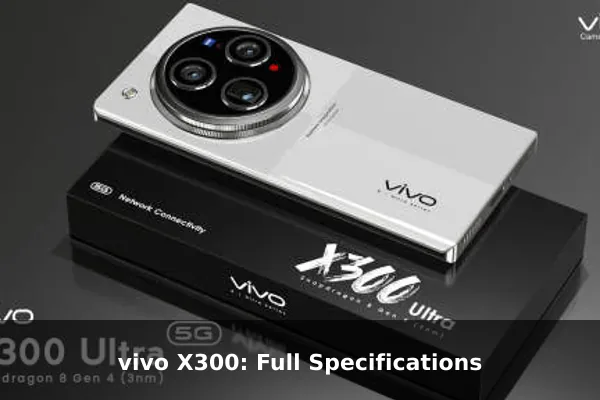
The vivo X300 offers a compelling combination of features and performance. While the base price is around €949, the actual cost may vary depending on your location and retailer. Below, you’ll find the approximate price of the vivo X300 converted into various currencies. Please note that these are estimates based on recent exchange rates as of July 20, 2026 and may not reflect the exact price you’ll find at a retailer.
- United States: $1,085
- Japan: ¥176,299
- United Kingdom: £807
- Australia: A$1,555
- Canada: C$1,521
- Taiwan: NT$35,105
- Denmark: kr7.083
- Saudi Arabia: ﷼4,069
- South Korea: ₩1,613,686
- Germany: €949
- Brazil: R$5.548
- Vietnam: ₫28.447.867
- Kenya: KSh 140,378
- India: ₹1,04,472
- Indonesia: Rp 19.428.508
- Nigeria: ₦1,494,569
- Pakistan: ₨301,824
- Philippines: ₱66,828
- Bangladesh: ৳১,৩৩,৮৭৮
Why Should You Buy the vivo X300?
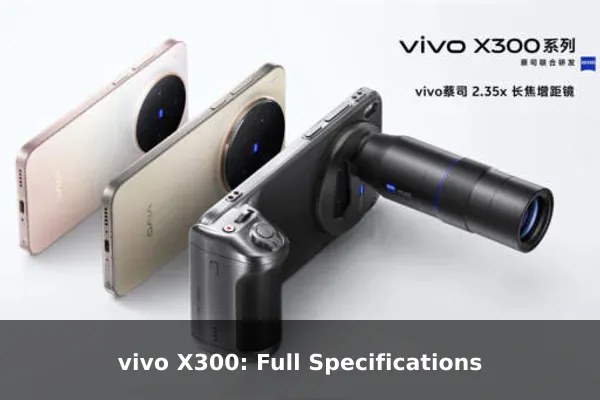
The vivo X300 makes the most sense for buyers who want flagship hardware without moving to an oversized phone. Its combination of a 200 MP main camera, 50 MP periscope telephoto camera, 50 MP ultrawide camera, Dimensity 9500 chipset, UFS 4.1 storage, stereo speakers, IP68/IP69 protection, and wireless charging gives it a premium feature set in a body that is still relatively manageable.
It is also a strong choice for users who care about camera variety. Instead of relying only on a high-resolution main sensor, vivo includes optical zoom, autofocus on the ultrawide camera, Zeiss optics, Zeiss T* coating, Laser AF, and 4K high-frame-rate video options. That makes the X300 more versatile than phones that advertise one headline sensor but compromise on supporting cameras.
Design and Durability

The vivo X300 has a glass front, aluminum alloy frame, and glass back, which matches what buyers expect from a modern premium phone. At 150.6 x 71.9 x 8 mm and 190 g, it is not an ultralight device, but the size is notably more compact than many phones with similar flagship internals. That balance should appeal to users who want one-handed comfort without dropping into a mid-range specification tier.
Durability is one of the more important parts of the design story. The phone carries IP68/IP69 dust and water resistance, including resistance to high-pressure water jets and immersion up to 1.5 m for 30 minutes. The display protection is listed as reinforced glass with Mohs level 4 scratch resistance, so a screen protector is still sensible for users who keep keys, grit, or tools near the phone.
Display Experience
The 6.31-inch LTPO AMOLED panel is one of the vivo X300’s strongest everyday features. The resolution of 1216 x 2640 pixels gives it a sharp density of about 460 ppi, while the 120Hz refresh rate keeps scrolling and supported animations smooth. LTPO technology is also useful because it can help the phone adapt refresh behavior instead of running at a high rate constantly.
Brightness and eye-comfort specifications are ambitious. The source data lists 4500 nits peak brightness, 2160Hz PWM dimming, HDR10+, HDR Vivid, and Ultra HDR image support. Test data also reports 1930 nits of measured maximum brightness, which is a more practical indicator for difficult outdoor viewing than peak marketing figures alone. For media, photography review, and daytime navigation, the display is a major selling point.
Performance and Storage
The vivo X300 uses the MediaTek Dimensity 9500, a 3 nm flagship chipset with an octa-core CPU layout led by a 4.21 GHz C1-Ultra core. The Arm G1-Ultra GPU and UFS 4.1 storage place it firmly in high-performance Android territory. Storage and memory configurations range from 256GB with 12GB RAM up to 1TB with 16GB RAM, although availability can vary by market.
The supplied benchmark results underline the performance positioning: AnTuTu scores of 2346352 on v10 and 3416530 on v11, GeekBench 9843 on v6, and 3DMark Wild Life Extreme 7510. Benchmarks are not the whole experience, but these numbers suggest the X300 is built for demanding games, heavy multitasking, high-resolution photo processing, and long-term software use.
Camera System
The rear camera setup is the most distinctive part of the vivo X300. The 200 MP wide camera has optical image stabilization and a large 1/1.4-inch sensor format, giving the phone a strong base for detail capture and stabilized low-light shooting. The 50 MP periscope telephoto camera adds 3x optical zoom with OIS, while the 50 MP ultrawide camera includes autofocus, making it more useful for close-up and wide-scene work than fixed-focus ultrawide units.
Video support is also extensive, with 4K recording up to 120fps, 1080p up to 240fps, gyro-EIS, and 4K 120fps HDR. The 50 MP front camera includes autofocus and supports 4K video at 30fps and 60fps, which is valuable for vloggers, video calls, and creators who frequently record from the front camera. The inclusion of 3D LUT import points toward users who want more control over color workflows.
Battery and Charging
The battery specification needs careful regional reading. The global version is listed with a 6040 mAh silicon-carbon lithium-ion battery, while EU markets are listed with a 5360 mAh battery. That means battery expectations should be based on the exact regional variant being sold, not only the largest advertised capacity.
Charging is flagship-grade either way. The phone supports 90W wired charging, 40W wireless charging, and reverse wired charging. The supplied test result lists an active use score of 17:31h, while the EU label data lists Class A energy performance, 52:15h endurance, 1200 battery cycles, Class B free-fall rating, and Class C repairability. Taken together, the X300 looks strong for endurance, but regional battery capacity remains an important buying detail.
Software and Long-Term Use
The vivo X300 ships with Android 16 and OriginOS 6, with support listed for up to five major Android upgrades. That matters because premium phones are often bought with a multi-year ownership plan in mind. A long update window helps protect the value of the hardware and keeps the device more competitive over time.
OriginOS 6 may feel different depending on the market and previous phone brand. Buyers moving from Samsung, Pixel, Xiaomi, or OnePlus phones should expect vivo’s own interface choices around home screen behavior, system apps, privacy tools, and camera processing. The hardware is clearly high-end, so the software experience and regional firmware policy should be part of the purchase decision.
Connectivity and Everyday Features
The vivo X300 covers a broad range of modern connectivity features, including GSM, HSPA, LTE, and Sub-6 5G with SA and NSA support. It also includes Wi-Fi 7, Bluetooth 5.4, NFC, an infrared port, USB Type-C 3.2 with OTG, and multi-system positioning with GPS, GLONASS, BDS, GALILEO, QZSS, and NavIC support. For frequent travelers, the detailed band support is one of the most useful parts of the specification sheet.
There are still a few practical limitations. There is no microSD card slot and no 3.5 mm headphone jack, so buyers should choose enough internal storage from the start and plan around wireless or USB-C audio. SIM support also varies by market, with the international model supporting dual Nano-SIM plus eSIM with a maximum of two active at a time, while the China model lists dual Nano-SIM.
Who Should Buy the vivo X300?
The vivo X300 is best suited to buyers who want a premium compact Android phone with a serious camera system, strong display brightness, fast wired and wireless charging, and high-end processing power. It is especially appealing if you want optical zoom and a flagship main camera without choosing a very large device.
It is less ideal for users who need expandable storage, a headphone jack, or guaranteed battery parity across every region. It may also be overkill for users who mainly browse, message, and stream video, because many cheaper phones can handle those tasks well. The X300 earns its place when its camera hardware, compact flagship format, and long software support are priorities.
Conclusion
The vivo X300 is a compact premium Android phone with a standout Zeiss-backed camera system, bright LTPO AMOLED display, Dimensity 9500 performance, strong charging options, and broad connectivity. Check the regional battery and SIM configuration before buying, but if you want a smaller flagship with serious imaging hardware, the vivo X300 is easy to recommend.
References
- vivo Global – X300 Parameters – Primary English specification page for vivo X300 covering display, chipset, memory, battery, cameras, bands, connectivity, sensors, and regional notes.
- vivo Indonesia – X300 Parameters – Official local product specification page with Indonesia-relevant variants, pricing, bands, colors, and in-box details.
- vivo China – X300 Specifications – Original official China specification page for the X300, including model number V2509A, launch timing, storage variants, network bands, and certification information.
- vivo China Newsroom – X300 Series Launch – Official launch article useful for announcement date, positioning, release timing, and launch pricing context.
- MediaTek Dimensity 9500 Official Product Page – Primary chipset reference for verifying Dimensity 9500 CPU, GPU, AI, connectivity, and storage-platform claims.
