
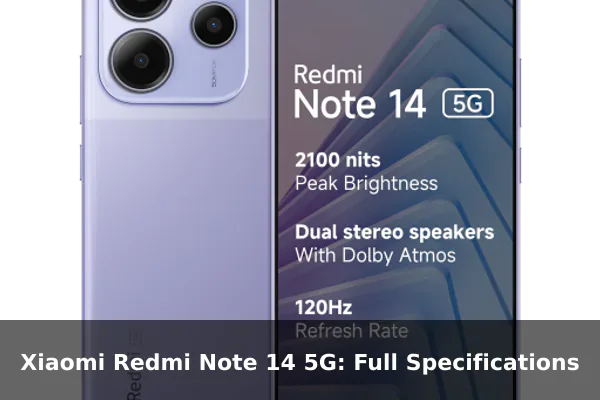
The Xiaomi Redmi Note 14 5G is a mid-range Android phone built around a bright AMOLED display, 5G connectivity, a large battery, and a 108 MP main camera. It sits in the familiar Redmi Note position: more ambitious than an entry-level phone, but still aimed at buyers who care about price as much as headline features.
This article focuses on what the Redmi Note 14 5G means in day-to-day use, not just the specification sheet. The full table will cover every band, sensor, and storage option separately, while the sections below explain the practical strengths, trade-offs, and ideal buyer profile.
Full Specifications
Network
| Technology: | GSM / HSPA / LTE / 5G |
| 2G bands: | GSM 850 / 900 / 1800 / 1900 |
| 3G bands: | HSDPA 800 / 850 / 900 / 1700(AWS) / 1900 / 2100 |
| 4G bands: | 1, 2, 3, 4, 5, 7, 8, 12, 13, 17, 18, 19, 20, 26, 28, 32, 38, 40, 41, 42, 48, 66 |
| 5G bands: | 1, 2, 3, 5, 7, 8, 12, 20, 26, 28, 38, 40, 41, 48, 66, 77, 78 SA/NSA |
| Speed: | HSPA, LTE, 5G |
Launch
| Announced: | 2025, January 10 |
| Status: | Available. Released 2025, January 16 |
Body
| Dimensions: | 162.4 x 75.7 x 8 mm (6.39 x 2.98 x 0.31 in) |
| Weight: | 190 g (6.70 oz) |
| Build: | Glass front (Gorilla Glass 5), plastic back, plastic frame |
| SIM: | Nano-SIM + Nano-SIM |
| IP64 dust tight and water resistant (water splashes) |
Display
| Type: | AMOLED, 120Hz, 960Hz PWM, HDR10+, 1200 nits (HBM), 2100 nits (peak) |
| Size: | 6.67 inches, 107.4 cm2 (~87.4% screen-to-body ratio) |
| Resolution: | 1080 x 2400 pixels, 20:9 ratio (~395 ppi density) |
| Protection: | Corning Gorilla Glass 5, Mohs level 5 |
Platform
| OS: | Android 14, up to 2 major Android upgrades, HyperOS |
| Chipset: | Mediatek Dimensity 7025 Ultra (6 nm) |
| CPU: | Octa-core (2×2.5 GHz Cortex-A78 & 6×2.0 GHz Cortex-A55) |
| GPU: | IMG BXM-8-256 |
Memory
| Card slot: | microSDXC (uses shared SIM slot) |
| Internal: | 128GB 6GB RAM, 256GB 8GB RAM, 256GB 12GB RAM, 512GB 12GB RAM |
| UFS 2.2 |
Main Camera
| Triple: | 108 MP, f/1.7, 24mm (wide), 1/1.67″, 0.64µm, PDAF, OIS 8 MP, f/2.2, 16mm (ultrawide), 1/4.4″, 1.0µm 2 MP, f/2.4, (macro) |
| Features: | LED flash, HDR, panorama |
| Video: | 1080p@30fps, gyro-EIS, OIS |
Selfie camera
| Single: | 20 MP, f/2.2, 21mm (wide), 1/4.0″, 0.7µm |
| Video: | 1080p@30fps |
Sound
| Loudspeaker: | Yes, with stereo speakers (with Dolby Atmos) |
| 3.5mm jack: | Yes |
| 24-bit/192kHz Hi-Res audio |
Comms
| WLAN: | Wi-Fi 802.11 a/b/g/n/ac, dual-band, Wi-Fi Direct |
| Bluetooth: | 5.3, A2DP, LE |
| Positioning: | GPS, GLONASS, BDS, GALILEO |
| NFC: | Yes (market/region dependent) |
| Infrared port: | Yes |
| Radio: | FM radio |
| USB: | USB Type-C 2.0, OTG |
Features
| Sensors: | Fingerprint (under display, optical), accelerometer, gyro, compass |
| Virtual proximity sensing |
Battery
| Type: | 5110 mAh |
| Charging: | 45W wired |
Misc
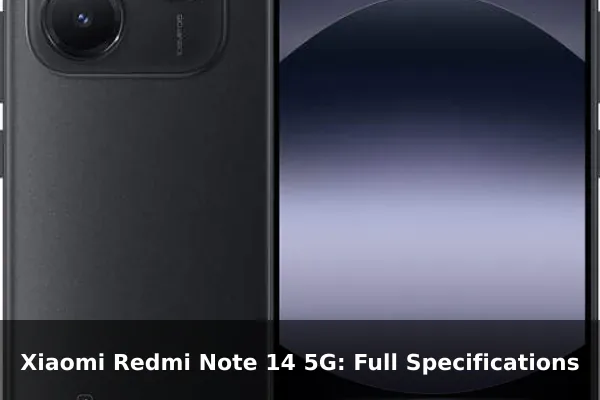
| Colors: | Midnight Black, Lavender Purple, Coral Green |
| Models: | 24094RAD4G |
| SAR EU: | 0.99 W/kg (head) 1.00 W/kg (body) |
| Price: | € 179.99 / $ 249.99 / £ 224.50 |
Our Tests
| Performance: | AnTuTu: 463129 (v10) GeekBench: 2258 (v6) |
| Display: | 1168 nits max brightness (measured) |
| Loudspeaker: | -22.7 LUFS (Excellent) |
| Battery: | Active use score 11:50h |
EU LABEL
| Energy: | Class D |
| Battery: | 38:56h endurance, 1000 cycles |
| Free fall: | Class D (45 falls) |
| Repairability: | Class C |
Price and Availability
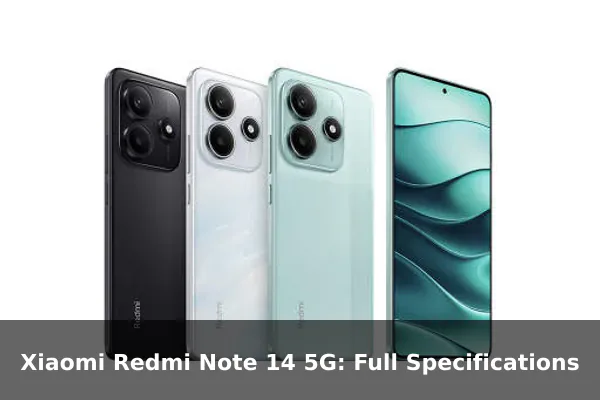
The Xiaomi Redmi Note 14 5G offers a compelling combination of features and performance. While the base price is around €180, the actual cost may vary depending on your location and retailer. Below, you’ll find the approximate price of the Xiaomi Redmi Note 14 5G converted into various currencies. Please note that these are estimates based on recent exchange rates as of October 9, 2026 and may not reflect the exact price you’ll find at a retailer.
- United States: $202
- Japan: ¥31,856
- United Kingdom: £153
- Australia: A$290
- Canada: C$287
- Taiwan: NT$6,440
- Denmark: kr1.345
- Saudi Arabia: ﷼756
- South Korea: ₩270,494
- Germany: €180
- Brazil: R$1.012
- Vietnam: ₫5.218.743
- Kenya: KSh 26,394
- India: ₹19,504
- Indonesia: Rp 3.603.217
- Nigeria: ₦272,033
- Pakistan: ₨55,879
- Philippines: ₱12,686
- Bangladesh: ৳২৪,৭৯০
Value Position
The Redmi Note 14 5G looks strongest as a value-focused 5G phone rather than a compact flagship substitute. Its combination of a Dimensity 7025 Ultra chipset, AMOLED screen, stereo speakers, 45W wired charging, and 108 MP main camera gives it a feature mix that should feel generous in the lower-midrange segment. The listed source pricing places it in budget-to-midrange territory, although real retail prices can vary by region, memory configuration, tax, and promotions.
Its most important distinction from cheaper Redmi models is not a single feature, but the overall balance: 5G bands, a higher-refresh display, optical in-display fingerprint reader, OIS on the main camera, and expandable storage. That makes it a practical choice for users upgrading from an older 4G phone who want modern connectivity without chasing flagship pricing.
Design And Durability
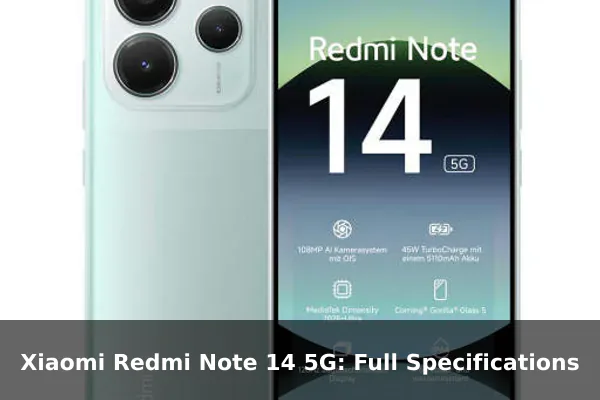
The phone uses a glass front with Gorilla Glass 5, plus a plastic frame and plastic back. That is a sensible construction for this class: it keeps weight to 190 g while still giving the display cover a recognized layer of scratch and impact resistance. The 8 mm thickness is also moderate for a phone with a 5110 mAh battery.
The IP64 rating is useful, but it should be understood correctly. It indicates dust-tight protection and resistance to splashes, not full waterproofing. Buyers who often use their phone near pools, beaches, or heavy rain should still treat it carefully. The color options, Midnight Black, Lavender Purple, and Coral Green, give the device a wider personality range than a plain black-only budget phone.
Display Experience
The 6.67-inch AMOLED panel is one of the phone’s most appealing parts. A 120Hz refresh rate should make scrolling and interface movement look smoother than standard 60Hz panels, while the 1080 x 2400 resolution keeps the image sharp enough for reading, social apps, maps, and streaming. Xiaomi’s official product page also highlights the 120Hz AMOLED display and 2100-nit peak brightness claim for the Redmi Note 14 5G.
The measured display result in the provided test data, 1168 nits maximum brightness, is more useful for expectations than peak marketing brightness alone. It suggests the screen should remain readable outdoors, although peak brightness figures are usually reached only in specific HDR or automatic-brightness conditions. Support for HDR10+ is a bonus for compatible video, but the phone’s main display appeal is everyday clarity and smoothness.
Performance And Storage
The MediaTek Dimensity 7025 Ultra is a 6 nm chipset with two Cortex-A78 performance cores and six Cortex-A55 efficiency cores. In practical terms, this is suitable for everyday multitasking, messaging, browsing, navigation, streaming, and casual gaming. The provided AnTuTu and GeekBench scores point to competent mid-range performance rather than enthusiast-level gaming power.
Storage flexibility is a real advantage. The phone is listed with configurations up to 512GB and 12GB RAM, and it supports microSDXC expansion through a shared SIM slot. UFS 2.2 storage is not the newest flagship standard, but it is appropriate for this price class and should feel faster than older eMMC-based budget phones.
Camera Approach
The rear camera system is led by a 108 MP wide camera with PDAF and optical image stabilization. OIS matters because it can help reduce blur in handheld photos and supports steadier 1080p video capture alongside electronic stabilization. For a phone in this segment, the stabilized main camera is the most meaningful imaging feature.
The 8 MP ultrawide adds framing flexibility for landscapes, buildings, and group shots, while the 2 MP macro camera is best treated as a casual extra. The 20 MP front camera should be enough for video calls and social selfies. The main limitation is video: recording tops out at 1080p at 30fps on both rear and front cameras, so buyers who want 4K capture should look higher in the range.
Battery And Charging
The 5110 mAh battery is a strong fit for the phone’s display size and chipset class. The supplied active use score of 11:50h suggests the Redmi Note 14 5G should handle a full day for many users, with the usual variation depending on brightness, 5G coverage, gaming, hotspot use, and camera recording.
Charging is rated at 45W wired. Xiaomi notes on its global specifications page that compatible 45W PD or Xiaomi official power adapters are recommended, so actual charging speed may depend on the charger included in the box or purchased separately. The EU label data also lists 1000 battery cycles, which is a useful long-term indicator for buyers planning to keep the phone beyond a short upgrade cycle.
Software And Updates
The Redmi Note 14 5G ships with Android 14 and HyperOS, with up to two major Android upgrades listed in the source data. HyperOS is Xiaomi’s current Android-based interface, so users can expect Xiaomi-style customization, system tools, and ecosystem features rather than a stock Android layout.
For long-term buyers, the two-major-upgrade promise is acceptable but not class-leading. It should cover the main Android version changes for a typical mid-range ownership cycle, but users who prioritize the longest possible update policy may want to compare it against Samsung, Google, or newer Xiaomi models with stronger software commitments.
Connectivity And Extras
The connectivity package is broad for a mid-range phone. It includes dual SIM support, 5G SA/NSA, Wi-Fi 5, Bluetooth 5.3, NFC depending on market, infrared, FM radio, USB-C with OTG, and satellite positioning across GPS, GLONASS, BDS, and GALILEO. The inclusion of infrared and FM radio gives it some old-school practicality that many newer phones have dropped.
Audio is another practical strength. Stereo speakers with Dolby Atmos and a 3.5 mm headphone jack make the Redmi Note 14 5G friendlier for wired headphones, casual video watching, and speaker playback. The provided loudspeaker test result of -22.7 LUFS is described as excellent, which supports the idea that media playback is one of its better everyday traits.
Who Should Buy It
The Redmi Note 14 5G is best for users who want a big, bright AMOLED screen, reliable battery life, expandable storage, dual SIM flexibility, and 5G at a sensible price. It is also a good fit for students, commuters, and everyday users who stream often, take casual photos, and want a phone that feels current without spending flagship money.
It is less ideal for buyers who need premium materials, full water resistance, 4K video, wireless charging, or top-tier gaming performance. Those users should compare it with higher Redmi Note Pro models, Poco performance phones, or more expensive Android alternatives. Compared with the Redmi Note 14 4G, this 5G model has the clearer appeal for buyers who want newer network support and a more future-ready modem.
References
- Xiaomi Global Redmi Note 14 5G specifications
- Xiaomi Global Redmi Note 14 5G product page
- GSMArena Redmi Note 14 5G review and lab tests
Conclusion
The Xiaomi Redmi Note 14 5G is a well-rounded mid-range phone with a strong display, useful battery life, broad connectivity, and a stabilized 108 MP main camera. Its main compromises are modest video recording, plastic construction, and a software support window that is good rather than exceptional. Recommended for buyers who want an affordable 5G Redmi with a premium-feeling screen and practical daily features.
