
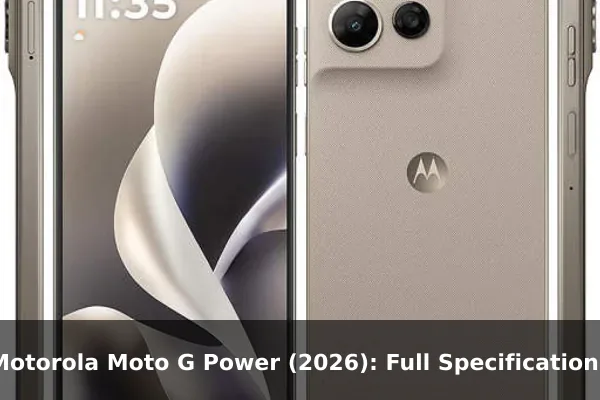
The Motorola Moto G Power (2026) is a battery-first 5G Android phone aimed at buyers who want durability, a large screen, expandable storage, and modern connectivity without moving into flagship pricing. Its headline mix is simple: a 6.8-inch 120Hz display, a Dimensity 6300 chipset, a 5200 mAh battery, and rugged-style protection in a practical midrange body.
This article looks at the Moto G Power (2026) from a specs-focused angle, with emphasis on the features that matter in daily use: display clarity, camera flexibility, charging options, audio, software, and network support. The full raw specifications table is handled separately, so the sections below focus on what those numbers mean for buyers.
Full Specifications
Network
| Technology: | GSM / HSPA / LTE / 5G |
| 2G bands: | GSM 850 / 900 / 1800 / 1900 |
| 3G bands: | HSDPA 850 / 900 / 1700(AWS) / 1900 / 2100 |
| 4G bands: | 1, 2, 3, 4, 5, 7, 8, 12, 13, 14, 17, 18, 20, 25, 26, 28, 29, 30, 38, 39, 40, 41, 48, 66, 71 |
| 5G bands: | 2, 5, 7, 12, 14, 25, 26, 29, 30, 41, 48, 66, 70, 71, 77, 78 SA/NSA/Sub6 |
| Speed: | HSPA, LTE, 5G |
Launch
| Announced: | 2025, December 16 |
| Status: | Coming soon. Exp. release 2026, January 08 |
Body
| Dimensions: | 166.6 x 77.1 x 8.7 mm (6.56 x 3.04 x 0.34 in) |
| Weight: | 208 g (7.34 oz) |
| Build: | Glass front (Gorilla Glass 7i), silicone polymer (eco leather) back, plastic frame |
| SIM: | Nano-SIM + eSIM |
| IP68/IP69 dust tight and water resistant (high pressure water jets; immersible up to 1.5m for 30 min) MIL-STD-810H compliant* * does not guarantee ruggedness or use in extreme conditions |
Display
| Type: | IPS LCD, 120Hz, 1000 nits (HBM) |
| Size: | 6.8 inches, 110.9 cm2 (~86.3% screen-to-body ratio) |
| Resolution: | 1080 x 2388 pixels (~387 ppi density) |
| Protection: | Corning Gorilla Glass 7i |
Platform
| OS: | Android 16 |
| Chipset: | Mediatek Dimensity 6300 (6 nm) |
| CPU: | Octa-core (2×2.4 GHz Cortex-A76 & 6×2.0 GHz Cortex-A55) |
| GPU: | Mali-G57 MC2 |
Memory
| Card slot: | microSDXC (dedicated slot) |
| Internal: | 128GB 8GB RAM |
| UFS 2.2 |
Main Camera
| Dual: | 50 MP, f/1.8, (wide), 1/2.88″, 0.61µm, PDAF, OIS 8 MP, f/2.2, 119˚ 13mm (ultrawide), 1.12µm, AF |
| Features: | LED flash, HDR, panorama |
| Video: | 1080p@30/60fps |
Selfie camera
| Single: | 32 MP, f/2.5, (wide) |
| Video: | 1080p@30fps |
Sound
| Loudspeaker: | Yes, with stereo speakers (with Dolby Atmos) |
| 3.5mm jack: | Yes |
| 24-bit/192kHz Hi-Res audio |
Comms
| WLAN: | Wi-Fi 802.11 a/b/g/n/ac, dual-band |
| Bluetooth: | Yes |
| Positioning: | GPS, GALILEO, GLONASS |
| NFC: | Yes |
| Radio: | FM radio |
| USB: | USB Type-C 2.0 |
Features
| Sensors: | Fingerprint (side-mounted), accelerometer, gyro, proximity, compass, barometer |
Battery
| Type: | 5200 mAh |
| Charging: | 30W wired 15W wireless |
Misc
| Colors: | Pantone: Evening Blue, Pure Cashmere |
| Price: | About 250 EUR |
Price and Availability
The Motorola Moto G Power (2026) offers a compelling combination of features and performance. While the base price is around €250, the actual cost may vary depending on your location and retailer. Below, you’ll find the approximate price of the Motorola Moto G Power (2026) converted into various currencies. Please note that these are estimates based on recent exchange rates as of October 14, 2026 and may not reflect the exact price you’ll find at a retailer.
- United States: $280
- Japan: ¥44,298
- United Kingdom: £211
- Australia: A$401
- Canada: C$398
- Taiwan: NT$8,995
- Denmark: kr1.869
- Saudi Arabia: ﷼1,049
- South Korea: ₩375,126
- Germany: €250
- Brazil: R$1.403
- Vietnam: ₫7.249.379
- Kenya: KSh 36,261
- India: ₹26,654
- Indonesia: Rp 5.013.851
- Nigeria: ₦371,421
- Pakistan: ₨77,533
- Philippines: ₱17,559
- Bangladesh: ৳৩৪,৪৭১
Value Positioning
The Moto G Power (2026) sits in a sensible part of Motorola’s lineup: not a bare-bones entry phone, but not a premium Edge-series device either. Its value comes from combining features that budget buyers often have to choose between. You get 5G, 8GB of RAM, 128GB of internal storage, a dedicated microSDXC slot, NFC, stereo speakers, a headphone jack, and both wired and wireless charging. That combination is useful because it keeps the phone flexible for several different user types, from commuters and students to backup-phone buyers and families replacing older LTE handsets.
The phone is especially interesting because it does not chase a single flashy spec while ignoring the basics. The Dimensity 6300 is a modest but modern 6 nm chipset, the display is a full-HD panel rather than a low-resolution screen, and the battery capacity is larger than the typical 5000 mAh baseline. In a specs comparison, the Moto G Power (2026) looks strongest when judged as a balanced everyday device rather than as a gaming phone or camera-first phone.

Design and Durability
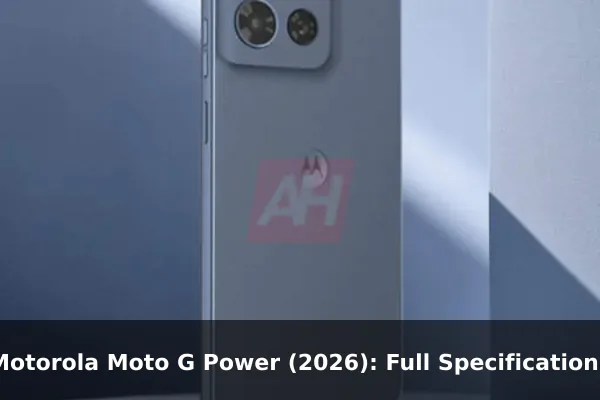
At 166.6 x 77.1 x 8.7 mm and 208 g, the Moto G Power (2026) is a large phone with a noticeable hand feel. That size is expected from a device with a 6.8-inch screen and a 5200 mAh battery, but buyers who prefer compact phones should pay attention to the width and weight. The silicone polymer eco-leather back is a practical design choice because it gives the phone a warmer, less slippery feel than glossy plastic or glass.
Durability is one of the phone’s clearest selling points. The source data lists Gorilla Glass 7i on the front, IP68/IP69 dust and water resistance, and MIL-STD-810H compliance with the usual caution that this does not guarantee ruggedness in extreme conditions. In plain terms, it is better equipped than many low-cost phones for rain, splashes, dust, and rougher everyday handling, but it should still be treated like a regular smartphone rather than a purpose-built rugged device.
Display Experience
The 6.8-inch IPS LCD display uses a 1080 x 2388 pixel resolution, which works out to about 387 ppi. That is sharp enough for reading, web browsing, maps, and video without the soft look of lower-resolution budget panels. The 120Hz refresh rate also helps the phone feel smoother during scrolling and app navigation, especially compared with older 60Hz models.
The choice of IPS LCD instead of OLED is the main trade-off. You should not expect the same black levels or contrast that an AMOLED panel can deliver, but the 1000-nit high brightness mode gives the phone a useful outdoor-visibility claim. For buyers who mostly care about size, smoothness, and legibility, this display setup is competitive. For movie-heavy users who want deep contrast, an OLED rival may still be more appealing.
Performance and Storage
The MediaTek Dimensity 6300 is an efficient 6 nm chip with two Cortex-A76 performance cores and six Cortex-A55 efficiency cores. This is a practical configuration for messaging, video streaming, navigation, social apps, light editing, and casual games. The Mali-G57 MC2 GPU is not positioned for demanding 3D gaming at high settings, but it should handle common Android workloads comfortably when expectations are realistic.
The 128GB storage and 8GB RAM configuration is a good baseline for 2026 budget and lower-midrange phones. UFS 2.2 storage is another welcome detail because it should feel more responsive than older eMMC storage in app installs, file movement, and day-to-day loading. The dedicated microSDXC slot is also important: users do not have to sacrifice a SIM slot to expand storage for photos, offline music, or downloaded video.
Camera Setup
The rear camera system is built around a 50MP wide camera with PDAF and optical image stabilization. OIS is the key spec here because it helps reduce blur from hand movement and can improve low-light shooting compared with basic fixed-lens systems. The second rear camera is an 8MP ultrawide with autofocus, giving the phone a genuinely useful secondary perspective for landscapes, interiors, group photos, and close framing.
Video tops out at 1080p at 30 or 60 fps on the rear camera, while the 32MP front camera records 1080p at 30 fps. That is enough for social clips, video calls, and everyday recording, but users who want 4K capture should look higher up the market. The strength here is not creator-grade video; it is having a stabilized main camera and an autofocus ultrawide in a budget-friendly package.

Battery and Charging
The 5200 mAh battery is central to the Moto G Power identity. Capacity alone does not guarantee endurance, because screen brightness, network conditions, apps, and chipset behavior all matter, but this size gives the phone a strong foundation for long daily use. It should suit users who stream, browse, message, and navigate throughout the day without wanting to hover near a charger.
Charging is more complete than expected for this class. The phone supports 30W wired charging and 15W wireless charging, which gives it a convenience edge over many budget phones that skip wireless charging entirely. The wired speed is not flagship-fast, but it is practical for a large battery, while wireless charging is useful for desks, nightstands, and cars with compatible pads.
Software and Everyday Features
The phone ships with Android 16, which is a strong starting point for a 2026 device. Motorola’s recent software approach typically keeps Android fairly familiar while adding Moto features around gestures, privacy, device connection, and personalization. The article does not assume any unsupported update promise, so buyers who care about long-term OS upgrades should confirm the policy for their region and carrier before purchase.
The feature list covers the essentials well. There is a side-mounted fingerprint reader, accelerometer, gyro, proximity sensor, compass, and barometer. Audio is another highlight: stereo speakers with Dolby Atmos, 24-bit/192kHz Hi-Res audio, FM radio, and a 3.5mm headphone jack make the phone more versatile for wired headphones, radio listening, and casual media playback.
Connectivity and Network Support
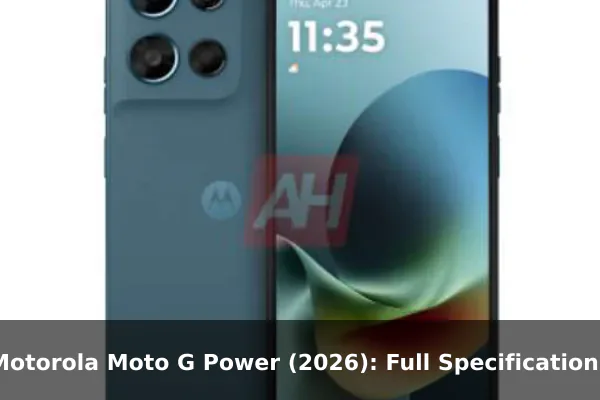
Network coverage is broad on paper, with GSM, HSPA, LTE, and 5G support. The 5G list includes sub-6 SA and NSA bands, while LTE band coverage is extensive enough to make the phone relevant for users who travel or move between carriers. As always, band support does not replace carrier certification, so buyers should check the exact model and operator compatibility before importing or switching networks.
Wireless connectivity includes dual-band Wi-Fi 802.11 a/b/g/n/ac, Bluetooth, GPS, GALILEO, GLONASS, NFC, FM radio, and USB Type-C 2.0. NFC is particularly useful because it enables contactless payments and quick pairing in supported regions. The inclusion of Nano-SIM plus eSIM also gives the phone more flexibility for travel, secondary lines, or switching plans without immediately replacing a physical SIM card.
Who Should Buy It?
The Moto G Power (2026) is best for buyers who want a large, durable, long-lasting Android phone with practical extras. It makes sense for students, delivery drivers, commuters, parents, and anyone who values battery life, expandable storage, water resistance, and a headphone jack more than premium materials or flagship camera processing. The Pantone Evening Blue and Pure Cashmere colors also give it more personality than the plain black-and-gray options common in this segment.
It is less ideal for users who prioritize compact size, OLED contrast, 4K video, or high-end gaming performance. The 208 g weight and 6.8-inch panel make it a big device, and the IPS LCD panel is a practical rather than luxurious choice. Still, for buyers comparing affordable 5G phones, the Moto G Power (2026) has a well-rounded spec sheet with enough durability and charging advantages to stand out.
References
Reference checks used for this article include Motorola’s official Moto G Power (2026) product page, Motorola’s launch announcement, and GSMArena’s device listing for cross-checking availability and core hardware details: Motorola official product page, Motorola News launch article, and GSMArena device page.
Conclusion
The Motorola Moto G Power (2026) is a strong practical pick for buyers who want a big 120Hz screen, dependable battery capacity, expandable storage, broad 5G support, and tougher-than-average protection at a sensible price point. Choose it if durability, battery life, and everyday features matter more to you than OLED contrast or flagship camera video.
