
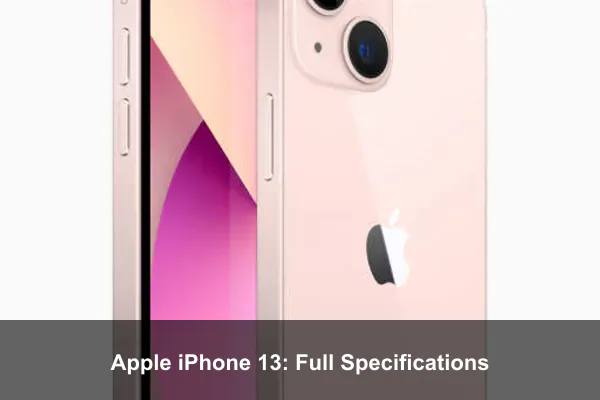
Apple iPhone 13 is a 6.1-inch iPhone built around the A15 Bionic chip, Super Retina XDR OLED display, 5G connectivity, and a dual 12 MP rear camera system.
This specs article focuses on how the iPhone 13 holds up as a practical compact flagship, with attention to performance, display quality, cameras, battery life, software support, and connectivity.
Full Specifications
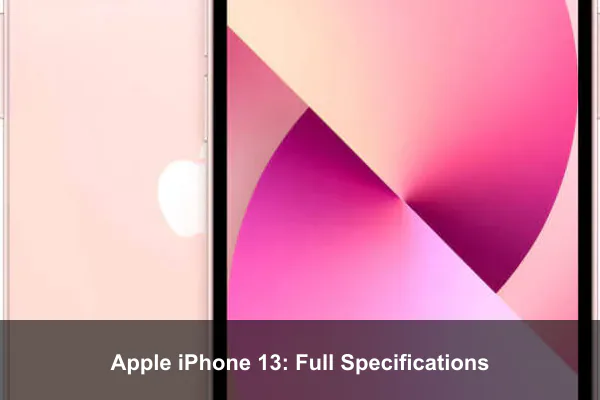
Network
| Technology: | GSM / CDMA / HSPA / EVDO / LTE / 5G |
| 2G bands: | GSM 850 / 900 / 1800 / 1900 |
| CDMA 800 / 1900 | |
| 3G bands: | HSDPA 850 / 900 / 1700(AWS) / 1900 / 2100 |
| CDMA2000 1xEV-DO | |
| 4G bands: | 1, 2, 3, 4, 5, 7, 8, 12, 13, 17, 18, 19, 20, 25, 26, 28, 30, 32, 34, 38, 39, 40, 41, 42, 46, 48, 66 – A2633, A2634, A2635 |
| 1, 2, 3, 4, 5, 7, 8, 11, 12, 13, 14, 17, 18, 19, 20, 21, 25, 26, 28, 29, 30, 32, 34, 38, 39, 40, 41, 42, 46, 48, 66, 71 – A2482, A2631 | |
| 5G bands: | 1, 2, 3, 5, 7, 8, 12, 20, 25, 28, 29, 30, 38, 40, 41, 48, 66, 71, 77, 78, 79 Sub6/mmWave – A2633 |
| 1, 2, 3, 5, 7, 8, 12, 20, 25, 28, 29, 30, 38, 40, 41, 48, 66, 71, 77, 78, 79, 258, 260, 261 SA/NSA/Sub6/mmWave – A2482 | |
| 1, 2, 3, 5, 7, 8, 12, 20, 25, 28, 29, 30, 38, 40, 41, 48, 66, 71, 77, 78, 79 SA/NSA/Sub6 – A2631 | |
| 1, 2, 3, 5, 7, 8, 12, 20, 25, 28, 30, 38, 40, 41, 48, 66, 77, 78, 79 SA/NSA/Sub6 – A2634, A2635 | |
| Speed: | HSPA, LTE, 5G, EV-DO Rev.A 3.1 Mbps |
Launch
| Announced: | 2021, September 14 |
| Status: | Available. Released 2021, September 24 |
Body
| Dimensions: | 146.7 x 71.5 x 7.7 mm (5.78 x 2.81 x 0.30 in) |
| Weight: | 174 g (6.14 oz) |
| Build: | Glass front, glass back, aluminum frame |
| SIM: | Nano-SIM + eSIMNano-SIM + Nano-SIM |
| IP68 dust tight and water resistant (immersible up to 6m for 30 min) Apple Pay (Visa, MasterCard, AMEX certified) |
Display
| Type: | Super Retina XDR OLED, HDR10, Dolby Vision, 800 nits (HBM), 1200 nits (peak) |
| Size: | 6.1 inches, 90.2 cm2 (~86.0% screen-to-body ratio) |
| Resolution: | 1170 x 2532 pixels, 19.5:9 ratio (~460 ppi density) |
| Protection: | Ceramic Shield glass |
Platform
| OS: | iOS 15, upgradable to iOS 18.6 |
| Chipset: | Apple A15 Bionic (5 nm) |
| CPU: | Hexa-core (2×3.23 GHz Avalanche + 4×1.82 GHz Blizzard) |
| GPU: | Apple GPU (4-core graphics) |
Memory
| Card slot: | No |
| Internal: | 128GB 4GB RAM, 256GB 4GB RAM, 512GB 4GB RAM |
| NVMe |
Main Camera
| Dual: | 12 MP, f/1.6, 26mm (wide), 1/1.9″, 1.7µm, dual pixel PDAF, sensor-shift OIS 12 MP, f/2.4, 120˚, 13mm (ultrawide), 1/3.4″, 1.0µm |
| Features: | Dual-LED dual-tone flash, HDR (photo/panorama) |
| Video: | 4K@24/25/30/60fps, 1080p@25/30/60/120/240fps, HDR, Dolby Vision HDR (up to 60fps), stereo sound rec. |
Selfie camera
| Single: | 12 MP, f/2.2, 23mm (wide), 1/3.6″, 1.0µm SL 3D, (depth/biometrics sensor) |
| Features: | HDR |
| Video: | 4K@24/25/30/60fps, 1080p@25/30/60/120fps, gyro-EIS |
Sound
| Loudspeaker: | Yes, with stereo speakers |
| 3.5mm jack: | No |
Comms
| WLAN: | Wi-Fi 802.11 a/b/g/n/ac/6, dual-band, hotspot |
| Bluetooth: | 5.0, A2DP, LE |
| Positioning: | GPS, GLONASS, GALILEO, BDS, QZSS |
| NFC: | Yes |
| Radio: | No |
| USB: | Lightning, USB 2.0 |
Features
| Sensors: | Face ID, accelerometer, gyro, proximity, compass, barometer |
| Ultra Wideband (UWB) support |
Battery
| Type: | Li-Ion 3240 mAh (12.41 Wh) |
| Charging: | Wired, PD2.0, 50% in 30 min 15W wireless (MagSafe) 15W wireless (Qi2) – requires iOS 17.2 update |
Misc
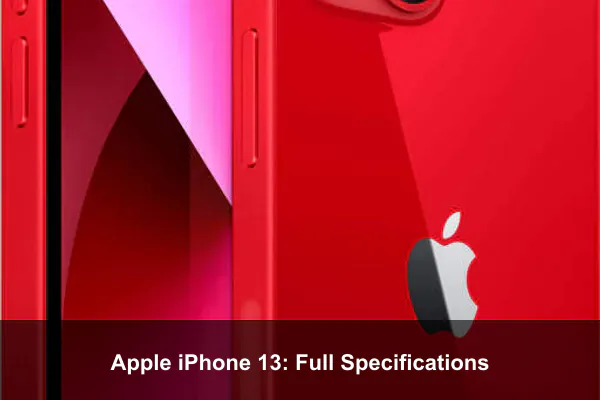
| Colors: | Starlight, Midnight, Blue, Pink, Red, Green |
| Models: | A2633, A2482, A2631, A2634, A2635, iphone14,5 |
| SAR: | 1.18 W/kg (head) 1.19 W/kg (body) |
| SAR EU: | 0.99 W/kg (head) 0.98 W/kg (body) |
| Price: | € 310.38 / $ 304.97 / £ 243.50 / ₹ 43,900 |
Our Tests
| Performance: | AnTuTu: 775519 (v9) GeekBench: 4645 (v5.1) GFXBench: 59fps (ES 3.1 onscreen) |
| Display: | 802 nits max brightness (measured) |
| Camera: | Photo / Video |
| Loudspeaker: | -25.5 LUFS (Very good) |
| Battery (old): | Endurance rating 89h |
Price and Availability
The Apple iPhone 13 offers a compelling combination of features and performance. While the base price is around €310, the actual cost may vary depending on your location and retailer. Below, you’ll find the approximate price of the Apple iPhone 13 converted into various currencies. Please note that these are estimates based on recent exchange rates as of May 12, 2026 and may not reflect the exact price you’ll find at a retailer.
- United States: $365
- Japan: ¥57,442
- United Kingdom: £269
- Australia: A$504
- Canada: C$500
- Taiwan: NT$11,462
- Denmark: kr2.316
- Saudi Arabia: ﷼1,370
- South Korea: ₩538,218
- Germany: €310
- Brazil: R$1.789
- Vietnam: ₫9.518.245
- Kenya: KSh 47,150
- India: ₹34,822
- Indonesia: Rp 6.376.477
- Nigeria: ₦492,224
- Pakistan: ₨101,811
- Philippines: ₱22,258
- Bangladesh: ৳৪৪,৮৯৬
Why Should You Buy Apple iPhone 13?
The iPhone 13 remains a strong choice for buyers who want a balanced iPhone with flagship-grade performance, a sharp OLED screen, reliable cameras, and a manageable 174 g body. Its value comes from combining the A15 Bionic platform with long software support and broad 5G band coverage.
Design and Durability
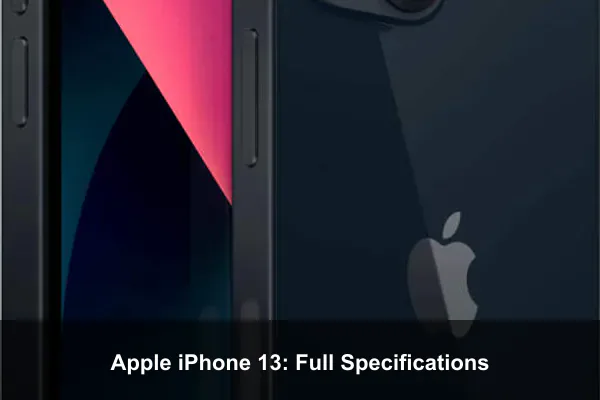
Apple uses a glass front, glass back, and aluminum frame, giving the phone a premium but not oversized feel. The IP68 rating adds dust protection and water resistance up to 6 meters for 30 minutes, while Ceramic Shield glass improves front protection compared with ordinary cover glass.
Display Experience
The 6.1-inch Super Retina XDR OLED panel is one of the key reasons to consider this model. It supports HDR10 and Dolby Vision, reaches up to 800 nits in high brightness mode and 1200 nits peak, and the 1170 x 2532 resolution delivers a dense 460 ppi image.
A15 Bionic Performance
The Apple A15 Bionic chip uses a 5 nm process with a hexa-core CPU and 4-core Apple GPU. Source test data lists AnTuTu v9 at 775519, GeekBench v5.1 at 4645, and GFXBench at 59 fps, making it suitable for demanding apps, gaming, and long-term iOS use.
Storage and Memory
The phone comes in 128 GB, 256 GB, and 512 GB versions, each paired with 4 GB RAM and NVMe storage. There is no card slot, so choosing the right storage tier matters if you record lots of 4K video or keep a large offline media library.
Camera System
The rear setup combines a 12 MP wide camera with dual pixel PDAF and sensor-shift OIS plus a 12 MP ultrawide camera with a 120-degree field of view. It is not a zoom-focused setup, but it is well suited for everyday photos, landscapes, indoor shots, and stabilized handheld video.
Video and Selfie Features
Video recording is a major strength, with rear 4K capture up to 60 fps, Dolby Vision HDR up to 60 fps, stereo sound recording, and slow-motion 1080p modes. The 12 MP front camera also records 4K up to 60 fps and includes gyro-EIS, supported by SL 3D depth sensing for Face ID.
Battery and Charging
The 3240 mAh battery is rated in the source tests with an 89-hour endurance score. Charging options include wired PD2.0 with 50% in 30 minutes, 15W MagSafe wireless charging, and 15W Qi2 wireless charging after the required iOS 17.2 update.
Software and Connectivity
The device launched with iOS 15 and is listed as upgradable to iOS 18.6. Connectivity is extensive, including 5G, LTE, Wi-Fi 6, Bluetooth 5.0, NFC, UWB support, GPS, GLONASS, GALILEO, BDS, QZSS, and Lightning over USB 2.0.
Who Should Buy It?
Apple iPhone 13 is best for users who want a compact mainstream iPhone with strong performance, excellent video capability, dependable cameras, stereo speakers, and modern iOS support. It is less ideal for buyers who need a telephoto camera, expandable storage, a 3.5 mm headphone jack, or USB-C.
Conclusion
Apple iPhone 13 is still a well-rounded iPhone with a bright OLED display, fast A15 Bionic chip, capable dual cameras, 5G, and durable construction. It is a concise recommendation for buyers who want a reliable iPhone without moving to a larger or more expensive model.
