
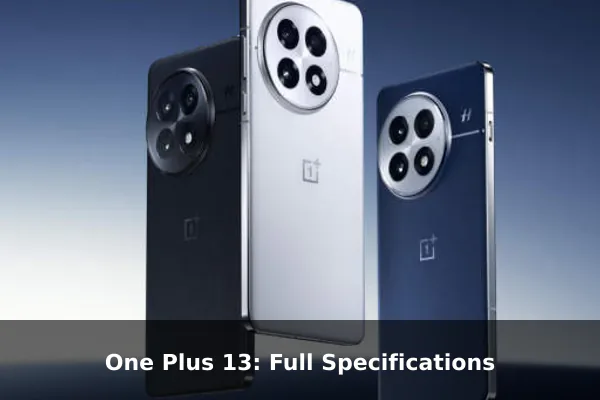
The OnePlus 13 arrives as the brand’s 2024 flagship, announced on October 31 and released a day later. It pairs Qualcomm’s Snapdragon 8 Elite with a 6.82-inch LTPO 4.1 AMOLED panel, a Hasselblad-tuned triple 50 MP rear camera system, and a 6000 mAh silicon-carbon battery, all wrapped in an IP68/IP69-rated body.
This breakdown focuses on how the OnePlus 13 differs from earlier OnePlus releases like the 11R and 13R, and how its hardware choices translate into day-to-day value for buyers comparing it against other Snapdragon 8 Elite phones in the same tier.
Full Specifications
Network
| Technology: | GSM / HSPA / LTE / 5G |
| 2G bands: | GSM 850 / 900 / 1800 / 1900 |
| 3G bands: | HSDPA 800 / 850 / 900 / 1700(AWS) / 1900 / 2100 – International |
| HSDPA 850 / 900 / 1900 / 2100 – India | |
| 4G bands: | 1, 2, 3, 4, 5, 7, 8, 12, 13, 17, 18, 19, 20, 25, 26, 28, 30, 32, 38, 39, 40, 41, 48, 66, 71 – International |
| 1, 3, 4, 5, 7, 8, 18, 19, 20, 26, 28, 34, 38, 39, 40, 41, 42, 48, 66 – China, India | |
| 5G bands: | 1, 2, 3, 5, 7, 8, 12, 20, 25, 28, 30, 38, 40, 41, 48, 66, 71, 75, 77, 78 SA/NSA/Sub6 – International |
| 1, 3, 5, 7, 8, 20, 28, 38, 40, 41, 48, 66, 77, 78 SA/NSA – China, India | |
| Speed: | HSPA, LTE (CA), 5G |
Launch
| Announced: | 2024, October 31 |
| Status: | Available. Released 2024, November 01 |
Body
| Dimensions: | 162.9 x 76.5 x 8.5 mm or 8.9 mm |
| Weight: | 210 g or 213 g (7.41 oz) |
| Build: | Glass front (Ceramic Guard), glass back or silicone polymer back (eco leather), aluminum frame |
| SIM: | Nano-SIM + Nano-SIM + eSIM (max 2 at a time)Nano-SIM + Nano-SIM |
| IP68/IP69 dust tight and water resistant (high pressure water jets; immersible up to 1.5m for 30 min) |
Display
| Type: | LTPO 4.1 AMOLED, 1B colors, 120Hz, 2160Hz PWM, Dolby Vision, HDR10+, HDR Vivid, 800 nits (typ), 1600 nits (HBM), 4500 nits (peak) |
| Size: | 6.82 inches, 113.0 cm2 (~90.7% screen-to-body ratio) |
| Resolution: | 1440 x 3168 pixels (~510 ppi density) |
| Protection: | Ceramic Guard glass, Mohs level 4 |
| Ultra HDR image support |
Platform
| OS: | Android 15, up to 4 major Android upgrades, OxygenOS 15 (International), ColorOS 15 (China) |
| Chipset: | Qualcomm SM8750-AB Snapdragon 8 Elite (3 nm) |
| CPU: | Octa-core (2×4.32 GHz Oryon V2 Phoenix L + 6×3.53 GHz Oryon V2 Phoenix M) |
| GPU: | Adreno 830 |
Memory
| Card slot: | No |
| Internal: | 256GB 12GB RAM, 512GB 12GB RAM, 512GB 16GB RAM, 1TB 24GB RAM |
| UFS 4.0 |
Main Camera
| Triple: | 50 MP, f/1.6, 23mm (wide), 1/1.43″, 1.12µm, multi-directional PDAF, OIS 50 MP, f/2.6, 73mm (periscope telephoto), 1/1.95″, 0.8µm, 3x optical zoom, PDAF, OIS 50 MP, f/2.0, 15mm, 120˚ (ultrawide), 1/2.75″, 0.64µm, PDAF |
| Features: | Laser focus, Hasselblad Color Calibration, color spectrum sensor, Dual-LED flash, HDR, panorama |
| Video: | 8K@30fps, 4K@30/60fps, 1080p@30/60/240/480fps, Auto HDR, gyro-EIS, Dolby Vision |
Selfie camera
| Single: | 32 MP, f/2.4, 21mm (wide), 1/2.74″, 0.8µm |
| Features: | HDR, panorama |
| Video: | 4K@30/60fps, 1080p@30/60fps, gyro-EIS |
Sound
| Loudspeaker: | Yes, with stereo speakers |
| 3.5mm jack: | No |
| 24-bit/192kHz Hi-Res audio |
Comms
| WLAN: | Wi-Fi 802.11 a/b/g/n/ac/6/7, dual or tri-band, Wi-Fi Direct |
| Bluetooth: | 5.4, A2DP, LE, aptX HD, LHDC 5 |
| Positioning: | GPS (L1+L5), GLONASS (G1), BDS (B1I+B1c+B2a), GALILEO (E1+E5a), QZSS (L1+L5), NavIC |
| NFC: | Yes |
| Infrared port: | Yes |
| Radio: | No |
| USB: | USB Type-C 3.2, OTG |
Features
| Sensors: | Fingerprint (under display, ultrasonic), accelerometer, gyro, proximity, compass, barometer |
| Circle to Search |
Battery
| Type: | Si/C Li-Ion 6000 mAh |
| Charging: | 100W wired, PD, QC, 50% in 13 min, 100% in 36 min 50W wireless 10W reverse wireless 5W reverse wired |
Misc
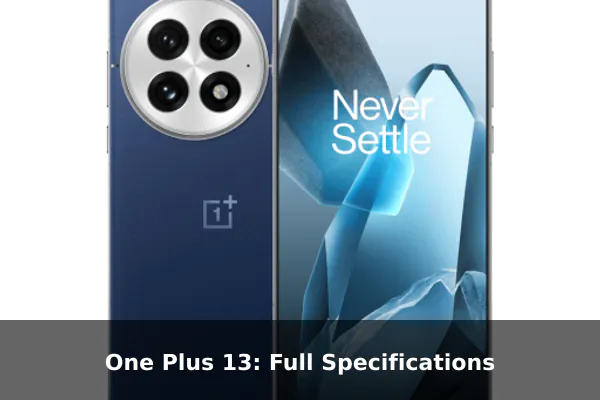
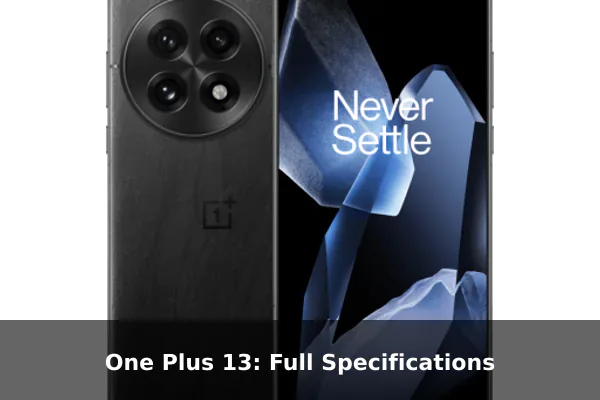
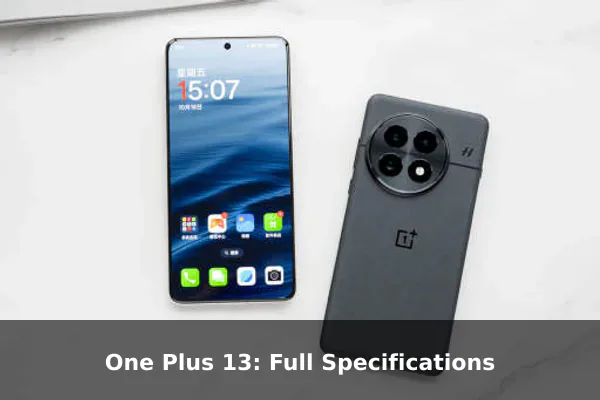
| Colors: | Black Eclipse, Arctic Dawn, Midnight Ocean |
| Models: | CPH2655, CPH2653, PJZ110, CPH2649 |
| SAR: | 1.13 W/kg (head) 1.15 W/kg (body) |
| Price: | € 822.00 / $ 787.98 / £ 749.99 / ₹ 62,999 |
Our Tests
| Performance: | AnTuTu: 2690491 (v10) GeekBench: 9278 (v6) 3DMark: 6615 (Wild Life Extreme) |
| Display: | 1204 nits max brightness (measured) |
| Loudspeaker: | -23.5 LUFS (Very good) |
| Battery: | Active use score 15:28h |
EU LABEL
| Energy: | Class A |
| Battery: | 61:36h endurance, 1000 cycles |
| Free fall: | Class D (45 falls) |
| Repairability: | Class B |
Price and Availability
The One Plus 13 offers a compelling combination of features and performance. While the base price is around €822, the actual cost may vary depending on your location and retailer. Below, you’ll find the approximate price of the One Plus 13 converted into various currencies. Please note that these are estimates based on recent exchange rates as of June 3, 2026 and may not reflect the exact price you’ll find at a retailer.
- United States: $956
- Japan: ¥152,877
- United Kingdom: £710
- Australia: A$1,333
- Canada: C$1,323
- Taiwan: NT$30,066
- Denmark: kr6.135
- Saudi Arabia: ﷼3,585
- South Korea: ₩1,451,367
- Germany: €822
- Brazil: R$4.800
- Vietnam: ₫24.957.460
- Kenya: KSh 123,871
- India: ₹91,070
- Indonesia: Rp 17.030.126
- Nigeria: ₦1,301,956
- Pakistan: ₨266,666
- Philippines: ₱58,998
- Bangladesh: ৳১,১৭,৪৫৩
Value Positioning Against the Flagship Field
Listed at roughly €822 / $787.98 / £749.99 / ₹62,999, the OnePlus 13 lands below most Snapdragon 8 Elite competitors while still offering top-tier internals. The base 256 GB / 12 GB RAM configuration is generous at this price, and the optional 1 TB / 24 GB RAM tier targets buyers who would otherwise look at ultra-premium flagships. For shoppers who want elite silicon without paying ultra-premium money, the pricing structure is the most compelling part of the package.
Design, Build, and Durability
The body measures 162.9 x 76.5 x 8.5 mm (or 8.9 mm depending on finish) and weighs 210 g or 213 g. OnePlus offers Black Eclipse, Arctic Dawn, and Midnight Ocean colorways, with the latter using a silicone polymer eco-leather back instead of glass. An aluminum frame ties the build together. The headline durability story is IP68 plus IP69 certification, which adds protection against high-pressure water jets on top of the usual 1.5 m / 30-minute immersion rating. Front protection comes from Ceramic Guard glass rated at Mohs level 4.
Display Quality and Outdoor Visibility
The 6.82-inch LTPO 4.1 AMOLED runs at 1440 x 3168 pixels (around 510 ppi) with a 120 Hz refresh rate and 2160 Hz PWM dimming. OnePlus quotes 800 nits typical, 1600 nits HBM, and 4500 nits peak brightness, with independent measurements landing at 1204 nits in full-screen scenarios. Dolby Vision, HDR10+, HDR Vivid, and Ultra HDR image support are all included, making it well-suited for streaming, mobile gaming, and HDR photography review.
Performance and Thermals
Inside, the Qualcomm SM8750-AB Snapdragon 8 Elite uses a 3 nm process and an octa-core Oryon V2 layout (2×4.32 GHz Phoenix L + 6×3.53 GHz Phoenix M) paired with the Adreno 830 GPU. Benchmark figures back up the silicon: AnTuTu v10 scored 2,690,491, Geekbench 6 reached 9278, and 3DMark Wild Life Extreme returned 6615. UFS 4.0 storage keeps app launches and large file transfers responsive across all memory tiers.
Hasselblad Triple Camera System
The rear array uses three 50 MP sensors: a 23 mm f/1.6 main with OIS on a 1/1.43-inch sensor, a 73 mm f/2.6 periscope telephoto delivering 3x optical zoom with OIS, and a 15 mm f/2.0 ultrawide with a 120-degree field of view and PDAF for closer focusing. Hasselblad Color Calibration, a dedicated color spectrum sensor, and laser autofocus round out the imaging stack. Video capture tops out at 8K at 30 fps, with 4K at 60 fps and 1080p slow motion up to 480 fps. The 32 MP f/2.4 selfie camera supports 4K at 60 fps.
Battery Endurance and Charging
A 6000 mAh silicon-carbon (Si/C) Li-Ion cell pushes the OnePlus 13 ahead of most flagships on capacity, and the active use score of 15:28 hours suggests strong real-world stamina. Wired charging is rated at 100 W with claims of 50 percent in 13 minutes and a full charge in 36 minutes. Wireless charging hits 50 W, with 10 W reverse wireless and 5 W reverse wired for accessories. The EU energy label cites 61:36 hours of endurance and 1000 charge cycles.
Software and Update Commitment
The OnePlus 13 ships with Android 15, dressed as OxygenOS 15 internationally and ColorOS 15 in China. OnePlus promises up to four major Android upgrades, which is competitive but trails Google and Samsung’s seven-year commitments. Circle to Search and other AI-driven shortcuts are present, and the UK PSTI compliance statement formally documents the support window for the CPH2653 variant.
Connectivity and Daily Conveniences
Wi-Fi 7 (with Wi-Fi 6 and earlier standards), Bluetooth 5.4 with aptX HD and LHDC 5, USB Type-C 3.2 with OTG, NFC, and an infrared port cover almost every daily-use scenario. Positioning is comprehensive, with dual-band GPS (L1+L5), GLONASS, BeiDou, Galileo, QZSS, and NavIC. Stereo speakers handle media playback (measured at -23.5 LUFS) and 24-bit/192 kHz Hi-Res audio is supported, although the 3.5 mm jack is omitted and there is no microSD slot.
Who Should Buy the OnePlus 13
This phone is aimed at buyers who want Snapdragon 8 Elite performance, a large 1440p OLED, and a Hasselblad-tuned triple camera at a price meaningfully below ultra-flagship territory. It is a stronger fit for power users, mobile gamers, and photographers than for buyers who prioritize the longest software window or a compact form factor.
Conclusion
The OnePlus 13 is a confident, well-rounded flagship: top-tier silicon, a bright LTPO display, a versatile Hasselblad triple camera, a 6000 mAh battery with 100 W wired charging, and IP68/IP69 durability at a price that undercuts most Snapdragon 8 Elite rivals. If you can live with four-generation Android updates and no headphone jack or microSD, it is one of the easiest flagship recommendations of this cycle.
Official references
- OnePlus 13 Official Specifications – Primary manufacturer source for dimensions, display, chipset, memory, battery, charging, cameras, connectivity bands, sensors, ports, and supported media formats.
- OnePlus 13 Quick Guide / Safety Guide – Official OnePlus PDF for model CPH2653 with regulatory, radio frequency, charging, SAR, and package/accessory details.
- OnePlus 13 UK PSTI Statement of Compliance – Official manufacturer compliance document confirming model CPH2653 and declared security support period.
- FCC Equipment Authorization System (apps.fcc.gov) – Official US regulator database for verifying FCC filings, RF exposure, wireless test reports, and model/FCC ID information for US variants.
- Qualcomm Snapdragon 8 Elite Mobile Platform – Primary chipset source for Snapdragon 8 Elite platform details referenced in OnePlus 13 performance specifications.
