
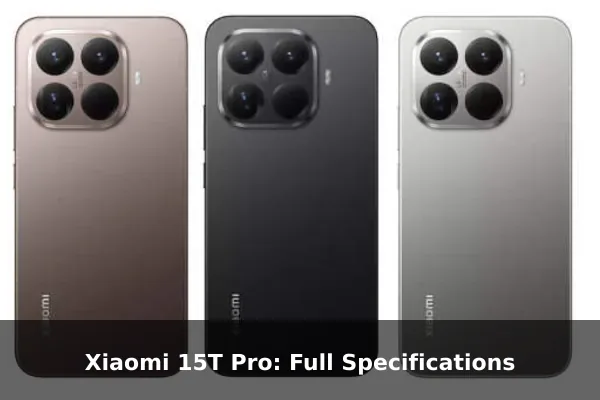
The Xiaomi 15T Pro arrives as a flagship-grade powerhouse that blends Leica-tuned optics with MediaTek’s top-tier Dimensity 9400+ silicon, aiming squarely at enthusiasts who want a no-compromise daily driver without paying ultra-premium prices. Announced on September 24, 2025, it sits in an interesting sweet spot where bleeding-edge hardware meets a relatively accessible €599 launch tag.
From its 6.83-inch 144Hz AMOLED panel pushing 3200 nits to a 5500 mAh cell with 90W wired charging, this phone is engineered for users who treat their smartphone as a primary camera, gaming console, and productivity tool all at once. Below we break down what makes this Xiaomi tick and whether it deserves a spot in your pocket.
Full Specifications
Network
| Technology: | GSM / HSPA / LTE / 5G |
| 2G bands: | GSM 850 / 900 / 1800 / 1900 |
| 3G bands: | HSDPA 800 / 850 / 900 / 1700(AWS) / 1900 / 2100 |
| 4G bands: | 1, 2, 3, 4, 5, 7, 8, 12, 13, 17, 18, 19, 20, 25, 26, 28, 32, 38, 39, 40, 41, 42, 48, 66, 71 |
| 5G bands: | 1, 2, 3, 5, 7, 8, 12, 20, 25, 26, 28, 38, 40, 41, 48, 66, 71, 75, 77, 78 SA/NSA |
| Speed: | HSPA, LTE, 5G |
Launch
| Announced: | 2025, September 24 |
| Status: | Available. Released 2025, September 24 |
Body
| Dimensions: | 162.7 x 77.9 x 8 mm (6.41 x 3.07 x 0.31 in) |
| Weight: | 210 g (7.41 oz) |
| Build: | Glass front (Gorilla Glass 7i), aluminum frame, fiber-reinforced plastic back |
| SIM: | · Nano-SIM + Nano-SIM + eSIM + eSIM (max 2 at a time)· Nano-SIM + Nano-SIM |
| IP68 dust tight and water resistant (immersible up to 3m for 30 min) 6M13 aluminium alloy, 330 N/mm frame rigidity, 321 N/mm device rigidity |
Display
| Type: | AMOLED, 68B colors, 144Hz, 3840Hz PWM, Dolby Vision, HDR10+, 3200 nits (peak) |
| Size: | 6.83 inches, 114.5 cm2 (~90.4% screen-to-body ratio) |
| Resolution: | 1280 x 2772 pixels, 19.5:9 ratio (~447 ppi density) |
| Protection: | Corning Gorilla Glass 7i, Mohs level 6 |
Platform
| OS: | Android 15, upgradable to Android 16, HyperOS 3 |
| Chipset: | Mediatek Dimensity 9400+ (3 nm) |
| CPU: | Octa-core (1×3.63 GHz Cortex-X925 & 3×3.3 GHz Cortex-X4 & 4×2.4 GHz Cortex-A720) |
| GPU: | Immortalis-G925 |
Memory
| Card slot: | No |
| Internal: | 256GB 12GB RAM, 512GB 12GB RAM, 1TB 12GB RAM |
| UFS 4.1 |
Main Camera
| Triple: | 50 MP, f/1.6, 23mm (wide), 1/1.31″, 1.2µm, multi-directional PDAF, OIS 50 MP, f/3.0, 115mm (periscope telephoto), 1/2.76″, 0.64µm, PDAF (10cm – ∞), OIS, 5x optical zoom 12 MP, f/2.2, 15mm, 120˚ (ultrawide), 1/3.06″, 1.12µm |
| Features: | Leica lens, Color spectrum sensor, Ultra HDR, LED flash, HDR, panorama |
| Video: | 8K@30fps, 4K@30/60/120fps, 1080p@30/60/120/240/960fps, gyro-EIS, 10-bit Rec. 2020, HDR10+ |
Selfie camera
| Single: | 32 MP, f/2.2, 21mm (wide), 1/3.44″, 0.64µm |
| Features: | HDR |
| Video: | 4K@30fps, 1080p@30/60fps, HDR10+ |
Sound
| Loudspeaker: | Yes, with stereo speakers (with Dolby Atmos) |
| 3.5mm jack: | No |
| 24-bit/192kHz Hi-Res & Hi-Res Wireless audio |
Comms
| WLAN: | Wi-Fi 802.11 a/b/g/n/ac/6e/7, dual-band, Wi-Fi Direct |
| Bluetooth: | 6.0, A2DP, LE |
| Positioning: | GPS (L1+L5), BDS (B1I+B1C+B2a+B2b), GALILEO (E1+E5a+E5b), QZSS (L1+L5), NavIC (L5), GLONASS |
| NFC: | Yes (market/region dependent) |
| Infrared port: | Yes |
| Radio: | No |
| USB: | USB Type-C 2.0, OTG |
Features
| Sensors: | Fingerprint (under display, optical), accelerometer, gyro, proximity, compass |
Battery
| Type: | 5500 mAh |
| Charging: | 90W wired, PD3.0, QC4, 100% in 36 min 50W wireless, 100% in 56 min |
Misc
| Colors: | Black, Gray, Mocha Gold |
| Models: | 2506BPN68G |
| SAR EU: | 0.99 W/kg (head) 0.99 W/kg (body) |
| Price: | € 599.00 / $ 814.68 / £ 509.99 |
Our Tests
| Performance: | AnTuTu: 2683380 (v10) GeekBench: 7914 (v6) 3DMark: 5887 (Wild Life Extreme) |
| Display: | 1419 nits max brightness (measured) |
| Loudspeaker: | -24.8 LUFS (Very good) |
| Battery: | Active use score 16:24h |
EU LABEL
| Energy: | Class A |
| Battery: | 57:43h endurance, 1600 cycles |
| Free fall: | Class A (270 falls) |
| Repairability: | Class C |
Price and Availability
The Xiaomi 15T Pro offers a compelling combination of features and performance. While the base price is around €599, the actual cost may vary depending on your location and retailer. Below, you’ll find the approximate price of the Xiaomi 15T Pro converted into various currencies. Please note that these are estimates based on recent exchange rates as of May 19, 2026 and may not reflect the exact price you’ll find at a retailer.
- United States: $698
- Japan: ¥110,820
- United Kingdom: £520
- Australia: A$974
- Canada: C$959
- Taiwan: NT$22,011
- Denmark: kr4.471
- Saudi Arabia: ﷼2,617
- South Korea: ₩1,044,077
- Germany: €599
- Brazil: R$3.517
- Vietnam: ₫18.236.378
- Kenya: KSh 90,237
- India: ₹67,171
- Indonesia: Rp 12.318.323
- Nigeria: ₦949,200
- Pakistan: ₨194,482
- Philippines: ₱43,044
- Bangladesh: ৳৮৫,৭৪৩
Value Proposition at €599
At a launch price of €599 (roughly $814 / £509), the 15T Pro undercuts most flagship rivals while still packing a Dimensity 9400+ chip, periscope telephoto, and IP68 rating. For buyers who want flagship internals without paying Galaxy Ultra or iPhone Pro Max money, the value equation here is hard to argue with.
Design and Build Quality
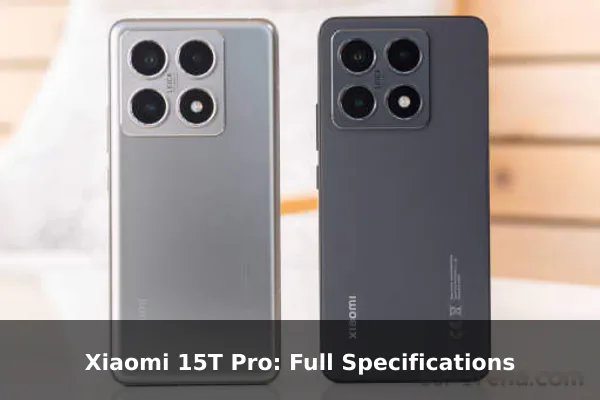
Measuring 162.7 x 77.9 x 8 mm and tipping the scales at 210 g, the 15T Pro uses a 6M13 aluminum alloy frame paired with Gorilla Glass 7i on the front and a fiber-reinforced plastic back. Xiaomi quotes 330 N/mm frame rigidity and 321 N/mm device rigidity, and the IP68 rating allows immersion up to 3 meters for 30 minutes. The phone ships in Black, Gray, and Mocha Gold.
Display Experience
The 6.83-inch AMOLED runs at 1280 x 2772 pixels (~447 ppi) with a 144Hz refresh rate and 3840Hz PWM dimming for eye comfort. Dolby Vision and HDR10+ are supported, and peak brightness hits 3200 nits on paper with 1419 nits measured in real testing — bright enough for confident outdoor visibility. Mohs level 6 scratch resistance adds peace of mind.
Performance and Gaming
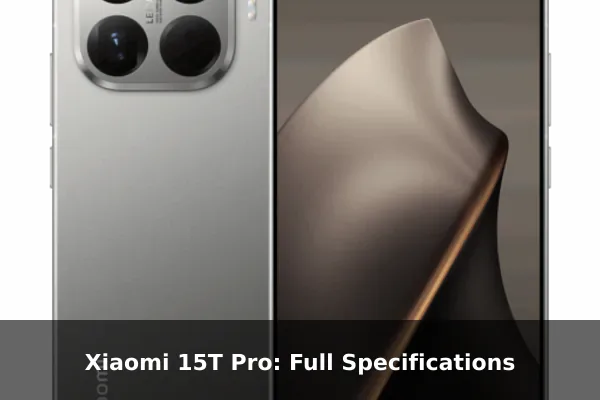
The 3nm Dimensity 9400+ pairs a 3.63 GHz Cortex-X925 prime core with three Cortex-X4 cores and four Cortex-A720 efficiency cores, backed by the Immortalis-G925 GPU. Benchmark scores tell the story: AnTuTu 2,683,380, GeekBench 7914, and 3DMark Wild Life Extreme 5887. Combined with UFS 4.1 storage and 12GB RAM across all tiers, sustained performance for gaming and pro workloads is excellent.
Leica Camera System
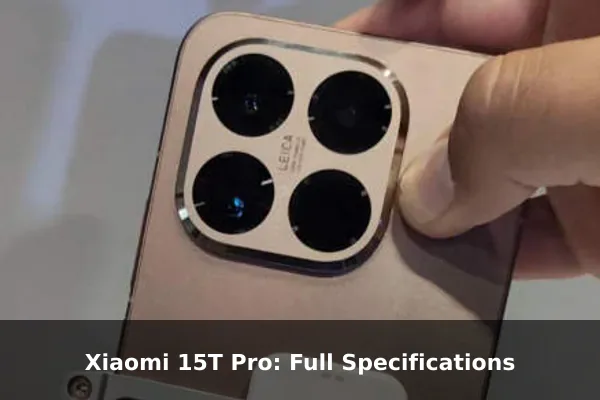
The triple rear setup leads with a 50MP f/1.6 wide sensor (1/1.31″) with OIS, joined by a 50MP f/3.0 periscope telephoto offering 5x optical zoom and OIS, plus a 12MP ultrawide with 120-degree field of view. Leica color tuning and a dedicated color spectrum sensor improve white balance, while 8K@30fps video and 10-bit Rec. 2020 HDR10+ recording make this a capable hybrid shooter.
Battery and Charging Speed
A 5500 mAh battery delivers an active use score of 16:24 hours and an EU-rated endurance of 57:43h across 1600 cycles. The 90W wired charging tops up the cell fully in 36 minutes, while 50W wireless takes 56 minutes — flexibility that matters for heavy users on the move.
Software and Updates
The device ships with HyperOS 3 on top of Android 15 and is upgradable to Android 16. Xiaomi’s redesigned interface emphasizes cross-device continuity, AI imaging tools, and improved animations, making the software side feel as modern as the hardware.
Connectivity Suite
You get Wi-Fi 7, Bluetooth 6.0, an IR blaster, dual-SIM with eSIM support, and a deep multi-band GNSS stack including NavIC L5. The one notable omission is USB Type-C limited to 2.0 speeds, which feels restrained on a phone aiming this high.
Who Should Buy It
This phone targets photography enthusiasts who want periscope reach without flagship pricing, gamers chasing Dimensity 9400+ horsepower, and anyone who values long battery life paired with fast top-ups. Buyers who need expandable storage, a headphone jack, or USB 3.x speeds should look elsewhere.
Conclusion
The Xiaomi 15T Pro is one of the most compelling value flagships of late 2025, pairing a Leica periscope camera, a 144Hz 3200-nit AMOLED, and the Dimensity 9400+ for under €600. If you can live without USB 3.x and a microSD slot, this is an easy recommendation for power users seeking flagship substance over flagship pricing.
