
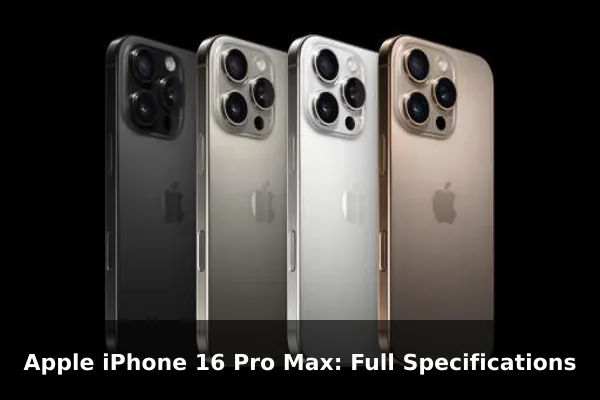
The Apple iPhone 16 Pro Max sits at the very top of Apple’s 2024 lineup, pairing a 6.9-inch LTPO Super Retina XDR OLED display with the 3 nm A18 Pro chipset and a grade-5 titanium frame. Announced on September 9, 2024 and released on September 20, it is built around a 5x periscope telephoto camera, a 48 MP ultrawide upgrade, and a 4685 mAh battery that targets all-day endurance.
According to Apple’s official tech specs, this is the largest and most camera-focused iPhone of its generation, leaning into pro video formats, satellite connectivity, and USB Type-C 3.2 Gen 2 speeds. This article breaks down what those numbers mean in daily use and where the Pro Max earns its premium over smaller and older iPhones.
Full Specifications
Network
| Technology: | GSM / CDMA / HSPA / EVDO / LTE / 5G |
| 2G bands: | GSM 850 / 900 / 1800 / 1900 |
| CDMA 800 / 1900 | |
| 3G bands: | HSDPA 850 / 900 / 1700(AWS) / 1900 / 2100 |
| CDMA2000 1xEV-DO | |
| 4G bands: | 1, 2, 3, 4, 5, 7, 8, 12, 13, 17, 18, 19, 20, 25, 26, 28, 30, 32, 34, 38, 39, 40, 41, 42, 48, 53, 66 – A3296 |
| 1, 2, 3, 4, 5, 7, 8, 12, 13, 14, 17, 18, 19, 20, 25, 26, 28, 29, 30, 32, 34, 38, 39, 40, 41, 42, 48, 53, 66, 71 – A3084 | |
| 1, 2, 3, 4, 5, 7, 8, 11, 12, 13, 14, 17, 18, 19, 20, 21, 25, 26, 28, 29, 30, 32, 34, 38, 39, 40, 41, 42, 48, 53, 66, 71 – A3295 | |
| 1, 2, 3, 4, 5, 7, 8, 12, 13, 17, 18, 19, 20, 25, 26, 28, 30, 32, 34, 38, 39, 40, 41, 42, 48, 66 – A3297 | |
| 5G bands: | 1, 2, 3, 5, 7, 8, 12, 20, 25, 26, 28, 30, 38, 40, 41, 48, 53, 66, 70, 75, 76, 77, 78, 79 SA/NSA/Sub6 – A3296 |
| 1, 2, 3, 5, 7, 8, 12, 14, 20, 25, 26, 28, 29, 30, 38, 40, 41, 48, 53, 66, 70, 71, 75, 76, 77, 78, 79, 258, 260, 261 SA/NSA/Sub6/mmWave – A3084 | |
| 1, 2, 3, 5, 7, 8, 12, 14, 20, 25, 26, 28, 29, 30, 38, 40, 41, 48, 53, 66, 70, 71, 75, 76, 77, 78, 79 SA/NSA/Sub6 – A3295 | |
| 1, 2, 3, 5, 7, 8, 12, 20, 25, 26, 28, 30, 38, 40, 41, 48, 66, 70, 75, 76, 77, 78, 79 SA/NSA/Sub6 – A3297 | |
| Speed: | HSPA, LTE, 5G, EV-DO Rev.A 3.1 Mbps |
Launch
| Announced: | 2024, September 09 |
| Status: | Available. Released 2024, September 20 |
Body
| Dimensions: | 163 x 77.6 x 8.3 mm (6.42 x 3.06 x 0.33 in) |
| Weight: | 227 g (8.01 oz) |
| Build: | Glass front, glass back, titanium frame (grade 5) |
| SIM: | Nano-SIM + eSIM + eSIM (max 2 at a time; International)eSIM + eSIM (8 or more, max 2 at a time; USA)Nano-SIM + Nano-SIM (China) |
| IP68 dust tight and water resistant (immersible up to 6m for 30 min) Apple Pay (Visa, MasterCard, AMEX certified) |
Display
| Type: | LTPO Super Retina XDR OLED, 120Hz, HDR10, Dolby Vision, 1000 nits (typ), 2000 nits (HBM) |
| Size: | 6.9 inches, 115.6 cm2 (~91.4% screen-to-body ratio) |
| Resolution: | 1320 x 2868 pixels, 19.5:9 ratio (~460 ppi density) |
| Protection: | Ceramic Shield glass (2024 gen), Mohs level 4 |
Platform
| OS: | iOS 18, upgradable to iOS 18.6 |
| Chipset: | Apple A18 Pro (3 nm) |
| CPU: | Hexa-core (2×4.05 GHz + 4×2.42 GHz) |
| GPU: | Apple GPU (6-core graphics) |
Memory
| Card slot: | No |
| Internal: | 256GB 8GB RAM, 512GB 8GB RAM, 1TB 8GB RAM |
| NVMe |
Main Camera
| Triple: | 48 MP, f/1.8, 24mm (wide), 1/1.28″, 1.22µm, dual pixel PDAF, sensor-shift OIS 12 MP, f/2.8, 120mm (periscope telephoto), 1/3.06″, 1.12µm, dual pixel PDAF, 3D sensor‑shift OIS, 5x optical zoom 48 MP, f/2.2, 13mm (ultrawide), 1/2.55″, 0.7µm, PDAF TOF 3D LiDAR scanner (depth) |
| Features: | Dual-LED dual-tone flash, HDR (photo/panorama) |
| Video: | 4K@24/25/30/60/100/120fps, 1080p@25/30/60/120/240fps, 10-bit HDR, Dolby Vision HDR (up to 60fps), ProRes, 3D (spatial) video/audio, stereo sound rec. |
Selfie camera
| Single: | 12 MP, f/1.9, 23mm (wide), 1/3.6″, 1.0µm, PDAF, OIS SL 3D, (depth/biometrics sensor) |
| Features: | HDR, Dolby Vision HDR, 3D (spatial) audio, stereo sound rec. |
| Video: | 4K@24/25/30/60fps, 1080p@25/30/60/120fps, gyro-EIS |
Sound
| Loudspeaker: | Yes, with stereo speakers |
| 3.5mm jack: | No |
Comms
| WLAN: | Wi-Fi 802.11 a/b/g/n/ac/6e/7, tri-band, hotspot |
| Bluetooth: | 5.3, A2DP, LE |
| Positioning: | GPS (L1+L5), GLONASS, GALILEO, BDS, QZSS, NavIC |
| NFC: | Yes |
| Radio: | No |
| USB: | USB Type-C 3.2 Gen 2, DisplayPort |
Features
| Sensors: | Face ID, accelerometer, gyro, proximity, compass, barometer |
| Ultra Wideband (UWB) support (gen2 chip) Emergency SOS, Messages and Find My via satellite |
Battery
| Type: | Li-Ion 4685 mAh |
| Charging: | Wired, PD2.0, 50% in 30 min 25W wireless (MagSafe), 15W wireless (China only) 15W wireless (Qi2) 4.5W reverse wired |
Misc
| Colors: | Black Titanium, White Titanium, Natural Titanium, Desert Titanium |
| Models: | A3296, A3084, A3295, A3297, iPhone17,2 |
| SAR: | 1.01 W/kg (head) 1.15 W/kg (body) |
| SAR EU: | 1.22 W/kg (head) 1.45 W/kg (body) |
| Price: | € 1,040.00 / $ 894.10 / £ 899.00 / ₹ 131,900 |
Our Tests
| Performance: | AnTuTu: 1838828 (v10) GeekBench: 8606 (v6) 3DMark: 4731 (Wild Life Extreme) |
| Display: | 1796 nits max brightness (measured) |
| Loudspeaker: | -24.4 LUFS (Very good) |
| Battery: | Active use score 17:18h |
EU LABEL
| Energy: | Class B |
| Battery: | 48:00h endurance, 1000 cycles |
| Free fall: | Class C (90 falls) |
| Repairability: | Class C |
Price and Availability
The Apple iPhone 16 Pro Max offers a compelling combination of features and performance. While the base price is around €1.040, the actual cost may vary depending on your location and retailer. Below, you’ll find the approximate price of the Apple iPhone 16 Pro Max converted into various currencies. Please note that these are estimates based on recent exchange rates as of May 29, 2026 and may not reflect the exact price you’ll find at a retailer.
- United States: $1,211
- Japan: ¥192,905
- United Kingdom: £901
- Australia: A$1,694
- Canada: C$1,672
- Taiwan: NT$37,999
- Denmark: kr7.762
- Saudi Arabia: ﷼4,541
- South Korea: ₩1,814,375
- Germany: €1.040
- Brazil: R$6.113
- Vietnam: ₫31.693.567
- Kenya: KSh 156,557
- India: ₹1,15,752
- Indonesia: Rp 21.508.115
- Nigeria: ₦1,655,225
- Pakistan: ₨337,395
- Philippines: ₱74,398
- Bangladesh: ৳১,৪৮,৬৩৬
Is the iPhone 16 Pro Max Worth the Premium?
As the flagship in its family, the 16 Pro Max bundles every Apple capability into one device: the fastest A18 Pro silicon, the biggest 6.9-inch screen, the longest battery life, and the only 5x optical telephoto in the Pro range. Buyers who want the no-compromise option pay for size and camera reach rather than a different processor, since the standard Pro shares the same chip. For most people the value lies in the larger display and superior endurance, so the upgrade makes most sense if you genuinely use the extra screen and zoom.
Design and Build Quality
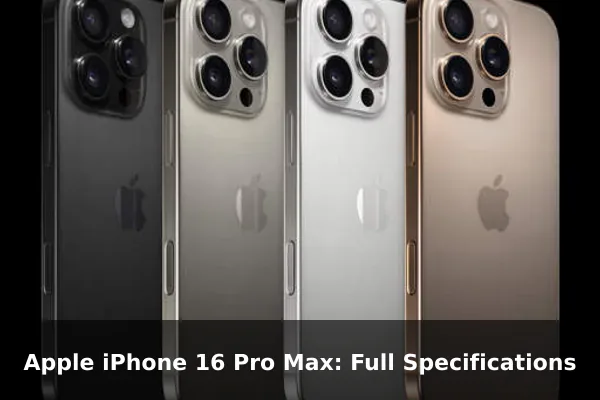
Measuring 163 x 77.6 x 8.3 mm and weighing 227 g, the Pro Max is a large, dense phone. The grade-5 titanium frame, glass front and back, and IP68 rating (immersible up to 6 m for 30 minutes) signal durability, while the new Ceramic Shield glass (2024 gen, rated Mohs level 4) adds scratch resistance. Four titanium finishes — Black, White, Natural, and Desert — keep the look understated. The trade-off is heft: at 227 g it is noticeably heavier than compact rivals and benefits from a case for grip.
Display Experience
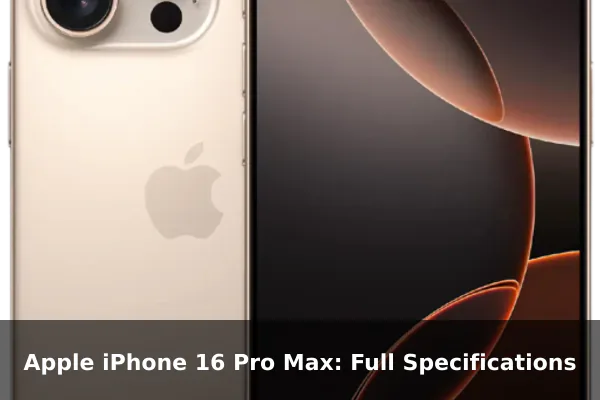
The 6.9-inch LTPO OLED panel runs at 1320 x 2868 pixels (~460 ppi) with a 120Hz ProMotion refresh rate, HDR10, and Dolby Vision. Apple lists 1000 nits typical and 2000 nits peak brightness, and independent measurements recorded around 1796 nits in testing — bright enough for confident outdoor visibility. The ~91.4% screen-to-body ratio and adaptive refresh make it well suited to video, gaming, and reading, and the LTPO tech helps preserve battery during low-motion content.
Performance and Software
The A18 Pro (3 nm) uses a hexa-core CPU (2×4.05 GHz + 4×2.42 GHz) and a 6-core GPU, paired with 8GB of RAM across the 256GB, 512GB, and 1TB storage tiers on fast NVMe. Benchmark runs include an AnTuTu score near 1,838,828 (v10), GeekBench 8606 (v6), and 3DMark Wild Life Extreme of 4731 — comfortably flagship-class figures. It ships with iOS 18, upgradable to iOS 18.6, and Apple’s long software-support track record makes it a strong choice for buyers who keep phones for several years.
Camera System
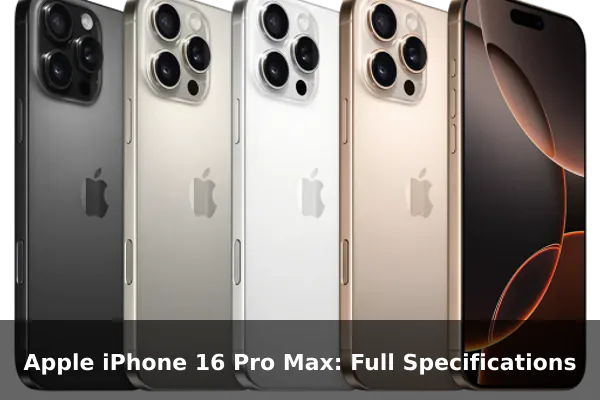
The triple rear setup combines a 48 MP f/1.8 wide with sensor-shift OIS, a 12 MP f/2.8 periscope telephoto offering 5x optical zoom, and a 48 MP f/2.2 ultrawide, plus a 3D LiDAR scanner for depth. Video is the standout: up to 4K at 120fps, 10-bit HDR, Dolby Vision, ProRes, and spatial (3D) video and audio. The 12 MP front camera supports 4K HDR capture as well. This makes the Pro Max one of the most capable mobile video tools available, with the periscope reach setting it apart from non-Pro iPhones.
Battery and Charging
The 4685 mAh battery posted a strong active-use score of about 17 hours 18 minutes in testing, and the EU energy label cites roughly 48 hours of endurance with a 1000-cycle rating (Energy Class B). Charging is wired via USB-C with PD2.0 (50% in 30 minutes), plus 25W MagSafe, 15W Qi2 wireless, and 4.5W reverse wired. Charging speeds remain modest compared with some Android flagships, so wired top-ups are slower than rivals offering 80W or more.
Connectivity
Connectivity is comprehensive: Wi-Fi 7 with tri-band support, Bluetooth 5.3, NFC, and USB Type-C 3.2 Gen 2 with DisplayPort output for fast file transfer and external displays. 5G coverage spans Sub6 across all models and mmWave on the US A3084 variant, and positioning includes dual-band GPS (L1+L5) with GLONASS, Galileo, BDS, QZSS, and NavIC. Second-generation Ultra Wideband and satellite-based Emergency SOS, Messages, and Find My round out a future-proof feature set.
Who Should Buy It
The 16 Pro Max is aimed at users who want the biggest screen, longest battery, and most versatile camera in Apple’s range — mobile videographers, frequent travelers, and anyone upgrading from an older iPhone such as the 11 or 13. If you prefer a lighter, more pocketable device or do not need 5x zoom, a smaller Pro or a Plus model may serve you better at lower cost.
Conclusion
The Apple iPhone 16 Pro Max is a complete, top-tier flagship: a bright 6.9-inch 120Hz display, the powerful A18 Pro chip, a flexible 5x telephoto camera system, and dependable all-day battery wrapped in durable titanium. Its main drawbacks are weight, modest charging speed, and a high price. For buyers who want Apple’s most capable phone for video, photography, and longevity — and who will use the extra size — it is an easy recommendation; those wanting better value or a lighter device should consider a smaller Pro or the iPhone 16 Plus. Always confirm current pricing, configurations, and availability on Apple’s official specs page before purchase.
Official references
- Apple – iPhone 16 Pro and 16 Pro Max Tech Specs – Official Apple specification page is the primary, authoritative source for exact technical specs (display, chip, camera, battery, dimensions) of the iPhone 16 Pro Max.
- Apple – iPhone 16 Pro Product Page – Official product page providing feature overviews, model variants, and current pricing/configuration options directly from the manufacturer.
- Apple Newsroom – iPhone 16 Pro Announcement – Official press materials confirm launch details, availability, and headline specifications as stated by Apple.
- Apple Support – Official documentation for verifying technical details such as supported iOS versions, charging standards, and connectivity specifications.
