
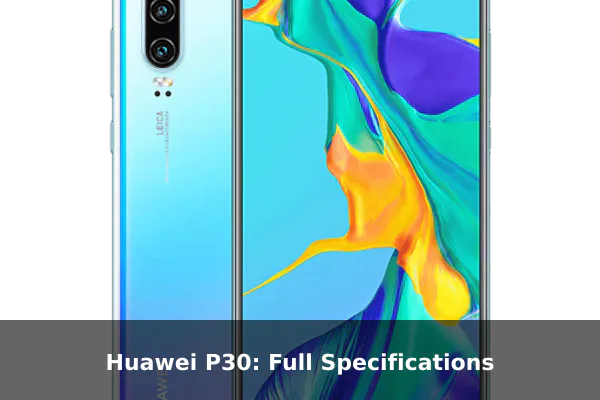
The Huawei P30 sits in an interesting place: it is a compact flagship from 2019 with a Leica-branded triple camera system, an OLED display, Kirin 980 performance, and 4G LTE connectivity rather than modern 5G.
This article takes a specs-focused look at the Huawei P30 from a buying and comparison perspective, highlighting where its hardware still feels strong and where age, software, and long-term support matter.
Full Specifications
Network
| Technology: | GSM / HSPA / LTE |
| 2G bands: | GSM 850 / 900 / 1800 / 1900 |
| 3G bands: | HSDPA 800 / 850 / 900 / 1700(AWS) / 1900 / 2100 |
| 4G bands: | 1, 2, 3, 4, 5, 6, 7, 8, 9, 12, 17, 18, 19, 20, 26, 28, 32, 34, 38, 39, 40 |
| Speed: | HSPA 42.2/5.76 Mbps, LTE Cat21 1400/200 Mbps |
Launch
| Announced: | 2019, March 26. Released 2019, March 26 |
| Status: | Discontinued |
Body
| Dimensions: | 149.1 x 71.4 x 7.6 mm (5.87 x 2.81 x 0.30 in) |
| Weight: | 165 g (5.82 oz) |
| Build: | Glass front (Aluminosilicate glass), glass back (Aluminosilicate glass), aluminum frame |
| SIM: | Nano-SIMNano-SIM + Nano-SIM |
| IP53 dust protected and water resistant (vertical water sprays) |
Display
| Type: | OLED, HDR10 |
| Size: | 6.1 inches, 91.3 cm2 (~85.8% screen-to-body ratio) |
| Resolution: | 1080 x 2340 pixels, 19.5:9 ratio (~422 ppi density) |
Platform
| OS: | Android 9.0 (Pie), upgradable to Android 10, EMUI 10 |
| Chipset: | Kirin 980 (7 nm) |
| CPU: | Octa-core (2×2.6 GHz Cortex-A76 & 2×1.92 GHz Cortex-A76 & 4×1.8 GHz Cortex-A55) |
| GPU: | Mali-G76 MP10 |
Memory
| Card slot: | Nano Memory (uses shared SIM slot) |
| Internal: | 64GB 8GB RAM, 128GB 6GB RAM, 128GB 8GB RAM, 256GB 8GB RAM |
| UFS 2.1 |
Main Camera
| Triple: | 40 MP, f/1.8, 27mm (wide), 1/1.7″, PDAF 8 MP, f/2.4, 80mm (telephoto), 1/4.0″, PDAF, OIS, 3x optical zoom 16 MP, f/2.2, 17mm (ultrawide), PDAF |
| Features: | Laser AF, color spectrum sensor, Leica optics, dual-LED dual-tone flash, panorama, HDR |
| Video: | 4K@30fps, 1080p@60fps, 1080p@30fps (gyro-EIS), 720p@960fps |
Selfie camera
| Single: | 32 MP, f/2.0, 26mm (wide), 1/2.8″, 0.8µm |
| Features: | HDR |
| Video: | 1080p@30fps |
Sound
| Loudspeaker: | Yes |
| 3.5mm jack: | Yes |
| 32-bit/384kHz audio |
Comms
| WLAN: | Wi-Fi 802.11 a/b/g/n/ac, dual-band, Wi-Fi Direct |
| Bluetooth: | 5.0, A2DP, aptX HD, LE |
| Positioning: | GPS (L1+L5), GLONASS (L1), BDS (B1), GALILEO (E1+E5a), QZSS (L1+L5) |
| NFC: | Yes |
| Radio: | No |
| USB: | USB Type-C 3.1 |
Features
| Sensors: | Fingerprint (under display, optical), accelerometer, gyro, proximity, compass |
Battery
| Type: | Li-Po 3650 mAh, non-removable |
| Charging: | 22.5W wired |
Misc
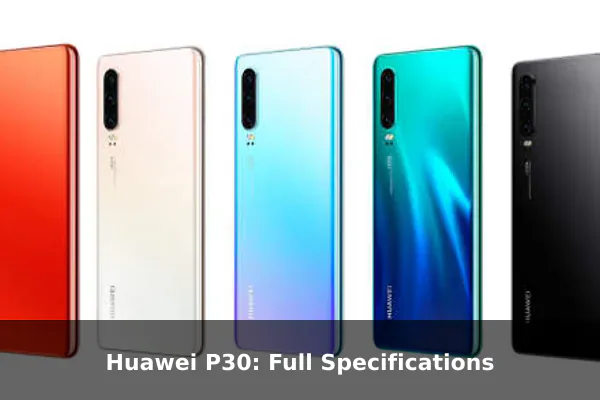
| Colors: | Aurora, Amber Sunrise, Breathing Crystal, Black, Pearl White |
| Models: | ELE-L29, ELE-L09, ELE-AL00, ELE-TL00, ELE-L04 |
| Price: | About 280 EUR |
Our Tests
| Performance: | AnTuTu: 314595 (v7) GeekBench: 10114 (v4.4) GFXBench: 28fps (ES 3.1 onscreen) |
| Display: | 635 nits max brightness (measured) |
| Camera: | Photo / Video |
| Loudspeaker: | Voice 83dB / Noise 75dB / Ring 83dB |
| Audio quality: | Noise -96.2dB / Crosstalk -97.5dB |
| Battery (old): | Endurance rating 83h |
Price and Availability
The Huawei P30 offers a compelling combination of features and performance. While the base price is around €280, the actual cost may vary depending on your location and retailer. Below, you’ll find the approximate price of the Huawei P30 converted into various currencies. Please note that these are estimates based on recent exchange rates as of October 3, 2026 and may not reflect the exact price you’ll find at a retailer.
- United States: $315
- Japan: ¥49,778
- United Kingdom: £238
- Australia: A$453
- Canada: C$449
- Taiwan: NT$10,040
- Denmark: kr2.093
- Saudi Arabia: ﷼1,181
- South Korea: ₩425,012
- Germany: €280
- Brazil: R$1.645
- Vietnam: ₫8.185.232
- Kenya: KSh 41,381
- India: ₹30,346
- Indonesia: Rp 5.628.048
- Nigeria: ₦426,110
- Pakistan: ₨87,267
- Philippines: ₱19,703
- Bangladesh: ৳৩৮,৯৭৩
Value Position
The Huawei P30 was launched as a premium Android phone, but its current appeal is mostly about value. With the source price listed at about 280 EUR, it targets buyers who want a former flagship experience without paying current flagship money. The strongest value points are the OLED screen, the Kirin 980 chipset, the versatile camera setup, NFC, USB Type-C 3.1, and a 3.5mm headphone jack. It is not a new-generation phone, so the value calculation depends on condition, regional software support, battery health, and whether 4G-only connectivity is acceptable.
Design and Build
The Huawei P30 is smaller and lighter than many modern phones, measuring 149.1 x 71.4 x 7.6 mm and weighing 165 g. That makes it appealing for users who want a phone that is easier to hold, pocket, and operate one-handed. The glass front, glass back, and aluminum frame give it a flagship-style construction, while the IP53 rating adds basic protection against dust and vertical water sprays. It should not be treated like a fully water-resistant phone, but the rating is still useful for everyday splashes.
Display Experience
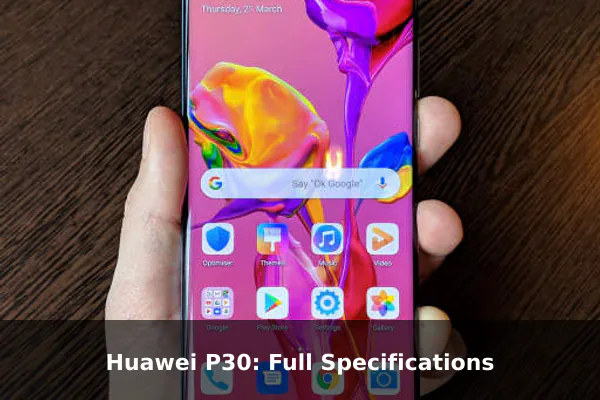
The 6.1-inch OLED display is one of the main reasons the P30 still looks competitive on paper. It supports HDR10 and has a 1080 x 2340 resolution with a sharp density of about 422 ppi. The measured 635 nits maximum brightness is respectable for its class and helps with outdoor readability. Compared with newer high-refresh-rate panels, the key omission is refresh rate, because the listed specifications do not indicate 90Hz or 120Hz support. Even so, the OLED contrast, compact size, and high pixel density make it a strong screen for media, browsing, and daily use.
Performance and Storage
The Kirin 980 is a 7 nm flagship chipset with an octa-core CPU and Mali-G76 MP10 graphics. Test results list an AnTuTu v7 score of 314595, GeekBench v4.4 score of 10114, and GFXBench ES 3.1 onscreen result of 28fps. Those numbers place the phone firmly in older flagship territory: fast enough for typical apps, multitasking, navigation, messaging, photography, and many games, though not comparable with today’s top Android chipsets. Storage options include 64GB with 8GB RAM, 128GB with 6GB or 8GB RAM, and 256GB with 8GB RAM, using UFS 2.1 storage. Expansion is possible through Nano Memory, but it uses the shared SIM slot.
Camera Strengths
The triple rear camera is the P30’s headline feature. It combines a 40 MP wide camera, an 8 MP telephoto camera with optical image stabilization and 3x optical zoom, and a 16 MP ultrawide camera. The setup is backed by Leica optics, Laser AF, a color spectrum sensor, dual-LED dual-tone flash, panorama, and HDR. This gives the phone a flexible camera range for wide landscapes, standard scenes, and closer telephoto framing. Video recording includes 4K at 30fps, 1080p at 60fps, gyro-EIS at 1080p 30fps, and 720p slow motion at 960fps.
Selfie and Audio
On the front, the Huawei P30 uses a 32 MP wide selfie camera with HDR and 1080p video recording at 30fps. The high-resolution sensor is useful for detailed selfies and video calls, although the listed video capability remains limited to Full HD. Audio is another practical strength because the phone keeps a 3.5mm headphone jack while also supporting 32-bit/384kHz audio. The loudspeaker test figures list 83dB for voice, 75dB for noise, and 83dB for ring, which suggests a capable loudspeaker for calls, alerts, and casual playback.
Battery and Charging
The 3650 mAh non-removable battery is modest by current standards, but the P30’s compact display size and efficient 7 nm chipset help balance the capacity. The listed endurance rating is 83 hours under the older test methodology, which points to dependable mixed use when the battery is healthy. Charging is rated at 22.5W wired, enough for practical top-ups but not in the same class as modern fast-charging phones. For a used unit, battery condition is especially important because age may matter more than the original capacity figure.
Software Considerations
The P30 launched with Android 9.0 Pie and is listed as upgradable to Android 10 with EMUI 10. For specs buyers, this is one of the biggest caution points. The hardware remains capable, but the platform is several Android generations behind current releases. App compatibility, security expectations, regional firmware, and update history should be checked before purchase. Buyers who prioritize long-term operating system support may be better served by a newer phone, while users focused on core apps and camera hardware may still find the P30 attractive.
Connectivity and Everyday Features
Connectivity is broad for a 4G phone. The P30 supports GSM, HSPA, and LTE with LTE Cat21 speeds listed at up to 1400 Mbps down and 200 Mbps up under ideal conditions. Wi-Fi 802.11 a/b/g/n/ac, Bluetooth 5.0 with aptX HD and LE, NFC, multi-system positioning, and USB Type-C 3.1 are included. There is no radio listed. Security is handled by an optical under-display fingerprint sensor, joined by accelerometer, gyro, proximity, and compass sensors. The key limitation is simple: this is not a 5G phone.
Who Should Buy It
The Huawei P30 makes the most sense for buyers who want a compact flagship-style Android phone with a strong OLED display, flexible Leica-branded cameras, solid 4G performance, NFC, and wired headphone support. It is less suitable for users who require 5G, the newest Android version, the longest update runway, or the biggest battery available. Compared with many modern mid-range phones, the P30 feels more premium in build and camera versatility, but newer devices may offer fresher software, larger batteries, and newer connectivity.
Conclusion
The Huawei P30 remains a distinctive compact flagship with a sharp OLED display, capable Kirin 980 performance, versatile triple cameras, useful connectivity, and a headphone jack. Its age, Android 10 software ceiling, 4G-only network support, and used-market battery condition are the main trade-offs. For buyers who value compact design and camera flexibility over the newest platform features, the Huawei P30 is still worth considering at the right price.
References
- HUAWEI P30 Specifications | HUAWEI Qatar – Official Huawei product specifications for the P30, covering display, dimensions, processor, cameras, battery, charging, network bands, connectivity, sensors, and in-box items.
- FCC Equipment Authorization attachment for Huawei ELE-L29/ELE-L09, FCC ID QISELE-LX9 – Official FCC filing material useful for verifying regulatory/SAR and radio certification details for Huawei P30 variants tied to FCC ID QISELE-LX9.
- GSMArena Huawei P30 Full Specifications – Widely used phone-spec reference for cross-checking model variants, storage/RAM options, network bands, launch status, and lab-test details.
- PhoneArena Huawei P30 Full Specifications – Established mobile reference source with detailed Huawei P30 specifications and regulatory fields such as FCC ID and SAR values for cross-checking.
