
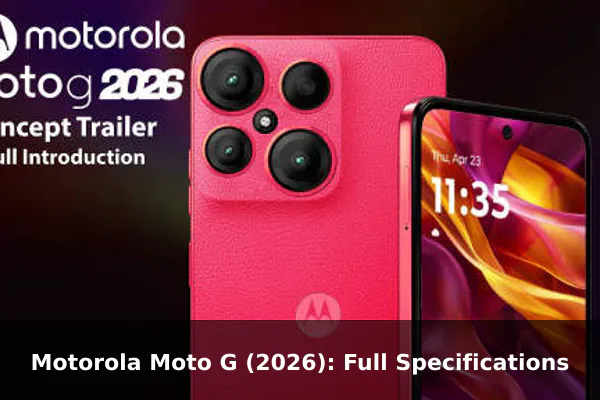
The Motorola Moto G (2026) continues one of the most recognizable budget smartphone lines, arriving with a 6nm MediaTek Dimensity 6300 chipset, a large 6.7-inch 120Hz display, and Android 16 straight out of the box. Announced on November 5, 2025 and released on December 11, 2025, it targets shoppers who want smooth everyday performance and a premium-looking design without stepping into mid-range pricing.
Priced at around 170 EUR, this Moto G leans on the essentials that matter to value buyers: a big 5200 mAh battery, an eco-leather back finish, stereo speakers with Dolby Atmos, a headphone jack, and expandable storage. This article breaks down what the device does well, where it makes compromises, and who it makes the most sense for.
Full Specifications
Network
| Technology: | GSM / HSPA / LTE / 5G |
| 2G bands: | GSM 850 / 900 / 1800 / 1900 |
| 3G bands: | HSDPA 850 / 900 / 1700(AWS) / 1900 / 2100 |
| 4G bands: | 1, 2, 3, 4, 5, 7, 8, 12, 13, 14, 17, 18, 20, 25, 26, 28, 29, 30, 38, 39, 40, 41, 48, 66, 71 |
| 5G bands: | 2, 5, 7, 12, 14, 25, 26, 29, 30, 41, 48, 66, 70, 71, 77, 78 SA/NSA/Sub6 |
| Speed: | HSPA, LTE, 5G |
Launch
| Announced: | 2025, November 05 |
| Status: | Available. Released 2025, December 11 |
Body
| Dimensions: | 167.2 x 76.4 x 8.5 mm (6.58 x 3.01 x 0.33 in) |
| Weight: | 202 g (7.13 oz) |
| Build: | Glass front (Gorilla Glass 3), silicone polymer (eco leather) back, plastic frame |
| SIM: | Nano-SIM + eSIM |
| Water-repellent design |
Display
| Type: | IPS LCD, 120Hz, 1000 nits (peak) |
| Size: | 6.7 inches, 108.2 cm2 (~84.7% screen-to-body ratio) |
| Resolution: | 720 x 1604 pixels, 20:9 ratio (~262 ppi density) |
| Protection: | Corning Gorilla Glass 3 |
Platform
| OS: | Android 16 |
| Chipset: | Mediatek Dimensity 6300 (6 nm) |
| CPU: | Octa-core (2×2.4 GHz Cortex-A76 & 6×2.0 GHz Cortex-A55) |
| GPU: | Mali-G57 MC2 |
Memory
| Card slot: | microSDXC (dedicated slot) |
| Internal: | 128GB 4GB RAM |
Main Camera
| Dual: | 50 MP, f/1.8, (wide), 0.61µm, PDAF 2 MP (macro) |
| Features: | LED flash, HDR, panorama |
| Video: | 1080p@30fps |
Selfie camera
| Single: | 32 MP, f/2.2, (wide), 0.64µm |
| Video: | 1080p@30fps |
Sound
| Loudspeaker: | Yes, with stereo speakers (with Dolby Atmos) |
| 3.5mm jack: | Yes |
| 24-bit/192kHz Hi-Res audio |
Comms
| WLAN: | Wi-Fi 802.11 a/b/g/n/ac, dual-band |
| Bluetooth: | Yes |
| Positioning: | GPS, GALILEO, GLONASS |
| NFC: | Yes |
| Radio: | No |
| USB: | USB Type-C 2.0 |
Features
| Sensors: | Fingerprint (side-mounted), accelerometer, gyro, proximity, compass, barometer |
Battery
| Type: | 5200 mAh |
| Charging: | 30W wired |
Misc
| Colors: | Pantone: Slipstream, Cattleya Orchid |
| Price: | About 170 EUR |
Price and Availability
The Motorola Moto G (2026) offers a compelling combination of features and performance. While the base price is around €170, the actual cost may vary depending on your location and retailer. Below, you’ll find the approximate price of the Motorola Moto G (2026) converted into various currencies. Please note that these are estimates based on recent exchange rates as of September 24, 2026 and may not reflect the exact price you’ll find at a retailer.
- United States: $194
- Japan: ¥30,636
- United Kingdom: £146
- Australia: A$275
- Canada: C$273
- Taiwan: NT$6,151
- Denmark: kr1.271
- Saudi Arabia: ﷼727
- South Korea: ₩264,603
- Germany: €170
- Brazil: R$995
- Vietnam: ₫5.032.655
- Kenya: KSh 25,124
- India: ₹18,549
- Indonesia: Rp 3.451.673
- Nigeria: ₦261,840
- Pakistan: ₨53,686
- Philippines: ₱12,133
- Bangladesh: ৳২৩,৮০৬
Value: What 170 EUR Buys in 2026
At roughly 170 EUR, the Moto G (2026) competes in the crowded entry-level tier where corners are usually cut aggressively. Motorola’s play here is a feature-rich sheet rather than raw benchmark power. You get 5G connectivity, a 120Hz screen, a headphone jack, a microSD slot, and NFC — a combination that many rivals at this price cannot match all at once. For buyers who prioritize longevity and daily comfort over gaming muscle, the value proposition is strong.
Design and Build Quality
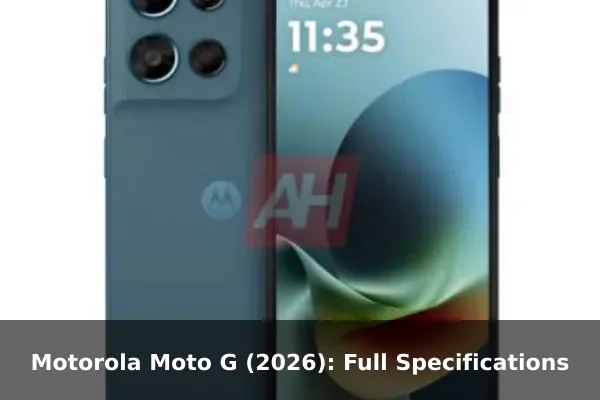
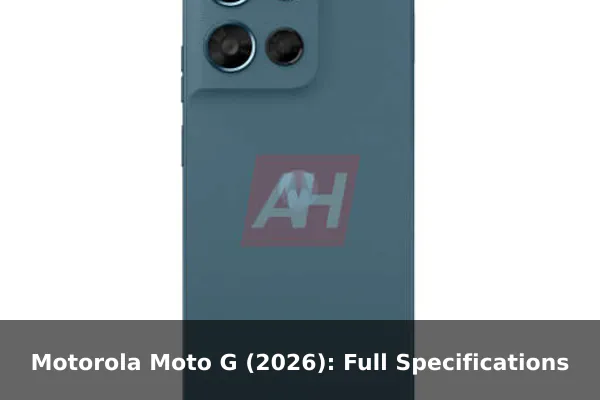
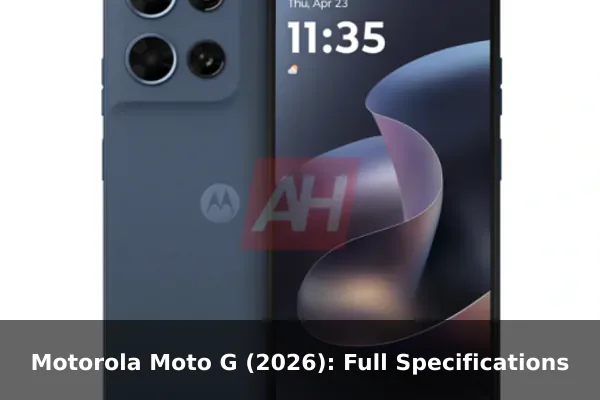
The phone measures 167.2 x 76.4 x 8.5 mm and weighs 202 g, so it is a sizeable handset that favors media consumption over one-handed use. Motorola pairs a Gorilla Glass 3 front with a silicone polymer ‘eco leather’ back and a plastic frame, plus a water-repellent design for peace of mind against splashes. The Pantone-curated Slipstream and Cattleya Orchid colors give it a more distinctive, fashion-forward look than the typical budget slab.
Display Experience
The 6.7-inch IPS LCD panel runs at a smooth 120Hz refresh rate and peaks at 1000 nits, which helps with outdoor visibility. The main compromise is resolution: at 720 x 1604 pixels (~262 ppi), text and fine detail are noticeably softer than on Full HD+ competitors. That trade-off keeps the price down and eases the load on the battery and chipset, but pixel-sensitive users should be aware of it before buying.
Performance and Software
Powering the phone is the MediaTek Dimensity 6300, built on a 6nm process with an octa-core CPU (2×2.4 GHz Cortex-A76 and 6×2.0 GHz Cortex-A55) and a Mali-G57 MC2 GPU. Paired with 4GB of RAM and 128GB of storage, it handles messaging, browsing, and video streaming comfortably, though heavy multitasking and demanding 3D games will test its limits. Running Android 16 out of the box with Motorola’s famously clean, near-stock interface is a genuine highlight at this price.
Camera Capabilities
The rear setup combines a 50 MP f/1.8 wide sensor with a 2 MP macro helper, supported by LED flash, HDR, and panorama modes. Video tops out at 1080p@30fps for both the rear and the 32 MP f/2.2 selfie camera. The high-resolution main sensor should deliver respectable daylight stills, while the modest video ceiling and simple secondary lens keep expectations realistic. This is a capable point-and-shoot package rather than a photography powerhouse.
Battery and Charging
A large 5200 mAh battery is the endurance backbone here, and combined with the power-efficient 6nm chipset and HD+ display, it should comfortably deliver a full day and often more for lighter users. Charging is rated at 30W wired, which is reasonable for the class, though there is no wireless charging — an expected omission at this price.
Connectivity and Extras
Connectivity is well-rounded for a budget device: 5G with broad SA/NSA/Sub6 band support, Wi-Fi 5 (dual-band), Bluetooth, NFC, and GPS with GALILEO and GLONASS. Motorola includes a side-mounted fingerprint sensor, a barometer, stereo speakers with Dolby Atmos, and 24-bit/192kHz Hi-Res audio via the retained 3.5mm jack. The main caveat is USB Type-C 2.0 speeds and the absence of FM radio.
Who Should Buy the Moto G (2026)
This phone is ideal for value-focused buyers, first-time smartphone owners, and anyone who wants clean Android software, long battery life, and practical extras like a headphone jack and expandable storage. Gamers and photography enthusiasts, or those who demand a sharp Full HD+ screen, will be better served by spending more. As a dependable daily driver, however, it hits its brief well.
Conclusion
The Motorola Moto G (2026) is a well-balanced budget smartphone that leans into practicality: a big 120Hz display, generous 5200 mAh battery, clean Android 16, 5G, and thoughtful extras rarely found together near 170 EUR. Its lower-resolution screen and modest gaming performance are the trade-offs. If you want a comfortable, long-lasting everyday phone and can look past those compromises, it earns an easy recommendation. Always confirm final pricing, availability, and exact specifications with official Motorola sources before purchase, as these can vary by region.
References
- Motorola Official Website (Moto G Series) – Primary source for official Moto G specifications, features, and pricing directly from the manufacturer.
- Lenovo/Motorola Newsroom – Official press releases and announcements for new Motorola devices, including confirmed specifications at launch.
- GSMArena – Well-established phone specification database widely used for standardized, detailed technical specs and comparisons.
- FCC (Federal Communications Commission) Equipment Authorization – Regulatory filings confirm hardware details, radio bands, and certification for devices sold in the US.
- Qualcomm Snapdragon / MediaTek Processor Pages (qualcomm.com) – Official chipset specifications (CPU/GPU, process node, connectivity) to verify the processor powering the device.
