
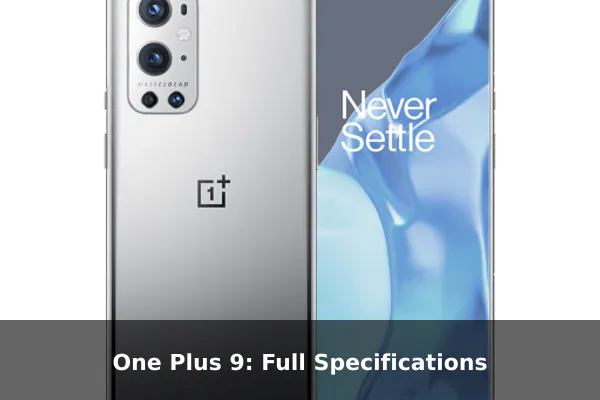
The OnePlus 9 arrived in March 2021 as the brand’s first mainstream flagship to carry the Hasselblad name, pairing a Snapdragon 888 platform with a 120Hz Fluid AMOLED screen and famously fast 65W charging. It was designed to sit just below the Pro model while keeping most of the headline features that define a true flagship experience.
Years after launch it remains an interesting reference point for buyers weighing older flagships against newer mid-rangers. This article looks at what the OnePlus 9 still does well, where it shows its age, and who should consider it today, using its official specifications as the foundation for a practical, comparison-friendly assessment.
Full Specifications
Network
| Technology: | GSM / CDMA / HSPA / LTE / 5G |
| 2G bands: | GSM 850 / 900 / 1800 / 1900 |
| CDMA 800 / 1900 | |
| 3G bands: | HSDPA 800 / 850 / 900 / 1700(AWS) / 1800 / 1900 / 2100 |
| 4G bands: | 1, 2, 3, 4, 5, 7, 8, 12, 13, 17, 18, 19, 20, 25, 26, 28, 32, 38, 39, 40, 41, 66 – EU |
| 1, 2, 3, 4, 5, 7, 8, 12, 13, 17, 18, 19, 20, 25, 26, 28, 30, 32, 38, 39, 40, 41, 46, 48, 66, 71 – NA | |
| 1, 2, 3, 4, 5, 7, 8, 12, 17, 18, 19, 20, 26, 34, 38, 39, 40, 41, 46 – IN | |
| 1, 2, 3, 4, 5, 7, 8, 12, 17, 18, 19, 20, 26, 34, 38, 39, 40, 41 – CN | |
| 5G bands: | 1, 3, 5, 7, 8, 20, 28, 38, 40, 41, 66, 78 SA/NSA – EU |
| 1, 2, 3, 5, 7, 8, 20, 25, 28, 38, 40, 41, 48, 66, 71, 77, 78 SA/NSA – NA | |
| 41, 78 SA/NSA – IN | |
| 1, 3, 28, 41, 78, 79 SA/NSA – CN | |
| Speed: | HSPA 42.2/5.76 Mbps, LTE (CA) Cat20 2000/200 Mbps, 5G |
Launch
| Announced: | 2021, March 23 |
| Status: | Available. Released 2021, March 26 |
Body
| Dimensions: | 160 x 74.2 x 8.7 mm (EU/NA)160 x 73.9 x 8.1 mm (IN/CN) |
| Weight: | 192 g (EU/NA)183 g (IN/CN) (6.46 oz) |
| Build: | Glass front (Gorilla Glass 5), glass back (Gorilla Glass 5), plastic frame |
| SIM: | Nano-SIMNano-SIM + Nano-SIM |
| IP68 dust tight and water resistant (T-Mobile version only) |
Display
| Type: | Fluid AMOLED, 120Hz, HDR10+, 1100 nits (peak) |
| Size: | 6.55 inches, 103.6 cm2 (~87.6% screen-to-body ratio) |
| Resolution: | 1080 x 2400 pixels, 20:9 ratio (~402 ppi density) |
| Protection: | Corning Gorilla Glass 5 |
Platform
| OS: | Android 11, upgradable to Android 13, OxygenOS 13 |
| Chipset: | Qualcomm SM8350 Snapdragon 888 5G (5 nm) |
| CPU: | Octa-core (1×2.84 GHz Cortex-X1 & 3×2.42 GHz Cortex-A78 & 4×1.80 GHz Cortex-A55) |
| GPU: | Adreno 660 |
Memory
| Card slot: | No |
| Internal: | 128GB 8GB RAM, 256GB 12GB RAM |
| UFS 3.1 |
Main Camera
| Triple: | 48 MP, f/1.8, 23mm (wide), 1/1.43″, 1.12µm, multi-directional PDAF 50 MP, f/2.2, 14mm (ultrawide), 1/1.56″, 1.0µm, AF 2 MP, f/2.4, (monochrome) |
| Features: | Hasselblad Color Calibration, color spectrum sensor, dual-LED flash, HDR, panorama |
| Video: | 8K@30fps, 4K@30/60fps, 1080p@30/60/240fps, Auto HDR, gyro-EIS |
Selfie camera
| Single: | 16 MP, f/2.4, (wide), 1/3.06″, 1.0µm |
| Features: | HDR |
| Video: | 1080p@30fps, gyro-EIS |
Sound
| Loudspeaker: | Yes, with stereo speakers |
| 3.5mm jack: | No |
| 24-bit/192kHz Hi-Res audio |
Comms
| WLAN: | Wi-Fi 802.11 a/b/g/n/ac/6, dual-band, Wi-Fi Direct, DLNA |
| Bluetooth: | 5.2, A2DP, LE, aptX HD |
| Positioning: | GPS (L1+L5), GLONASS (G1), BDS (B1), GALILEO (E1+E5a) |
| NFC: | Yes |
| Radio: | No |
| USB: | USB Type-C 3.1, OTG |
Features
| Sensors: | Fingerprint (under display, optical), accelerometer, gyro, proximity, compass |
Battery
| Type: | Li-Po 4500 mAh |
| Charging: | 65W wired, PD, 100% in 29 min 15W wireless (EU/NA) |
Misc
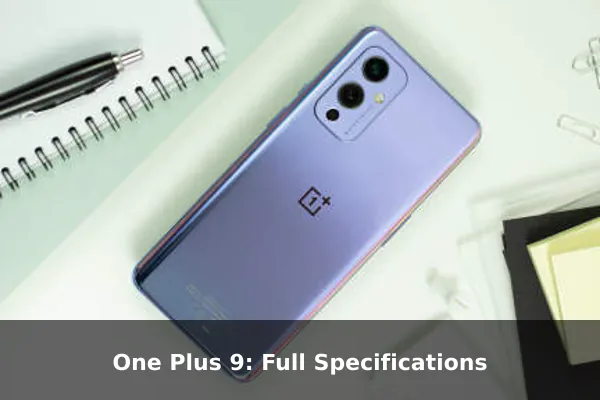
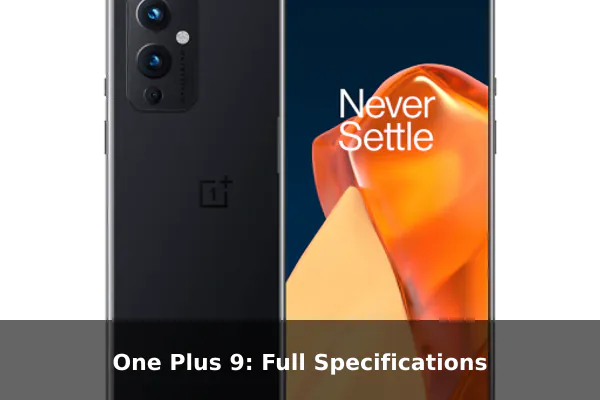
| Colors: | Winter Mist, Arctic Sky, Astral Black |
| Models: | LE2113, LE2111, LE2110, LE2117, LE2115 |
| Price: | € 229.99 / $ 174.00 / £ 169.99 |
Our Tests
| Display: | 821 nits max brightness (measured) |
| Camera: | Photo / Video |
| Loudspeaker: | -24.5 LUFS (Very good) |
| Battery (old): | Endurance rating 87h |
Price and Availability
The One Plus 9 offers a compelling combination of features and performance. While the base price is around €230, the actual cost may vary depending on your location and retailer. Below, you’ll find the approximate price of the One Plus 9 converted into various currencies. Please note that these are estimates based on recent exchange rates as of July 9, 2026 and may not reflect the exact price you’ll find at a retailer.
- United States: $263
- Japan: ¥42,667
- United Kingdom: £196
- Australia: A$379
- Canada: C$372
- Taiwan: NT$8,423
- Denmark: kr1.717
- Saudi Arabia: ﷼984
- South Korea: ₩395,754
- Germany: €230
- Brazil: R$1.353
- Vietnam: ₫6.882.538
- Kenya: KSh 33,928
- India: ₹25,070
- Indonesia: Rp 4.725.734
- Nigeria: ₦358,208
- Pakistan: ₨73,095
- Philippines: ₱16,155
- Bangladesh: ৳৩২,৩৭৭
Why the OnePlus 9 Still Matters
The OnePlus 9 was positioned as a cleaner, more focused flagship at a time when phone prices were climbing sharply. It kept the essentials buyers cared about — a fast chipset, a high-refresh AMOLED panel, rapid charging, and a clean software experience — while trimming a few extras reserved for the Pro. That balance is exactly why it still appeals to anyone shopping the used or discounted market, where a former flagship can outperform many current budget devices for the same money.
Design and Build Quality
Physically, the OnePlus 9 keeps things understated. It uses a glass front and glass back, both protected by Gorilla Glass 5, wrapped around a plastic frame that helps keep weight down to roughly 183–192 g depending on the regional variant. The result is a phone that feels light in hand for its size, at around 8.1–8.7 mm thick. Colour options included Winter Mist, Arctic Sky, and Astral Black. Notably, only the T-Mobile version carried an official IP68 rating, so open-market buyers should treat water resistance cautiously rather than assume it.
Display Experience
The 6.55-inch Fluid AMOLED panel is one of the OnePlus 9’s strongest features. It runs at a smooth 120Hz refresh rate, supports HDR10+, and reaches a quoted 1100 nits peak brightness, though independent testing measured around 821 nits in real use. With a 1080 x 2400 resolution and roughly 402 ppi, text and images stay crisp, and the high screen-to-body ratio of about 87.6% keeps the front looking modern. For streaming, browsing, and everyday scrolling, it remains a very pleasant screen.
Performance and Software
Inside sits Qualcomm’s Snapdragon 888 5G, built on a 5 nm process, paired with 8GB or 12GB of RAM and fast UFS 3.1 storage in 128GB or 256GB capacities. This is a proper flagship-class platform that still handles demanding apps and games comfortably. The phone shipped with Android 11 and was later upgradable to Android 13 with OxygenOS 13. Buyers should note that software support has since wound down, so it is best viewed as a device that is capable today rather than one guaranteed years of future updates.
Camera System
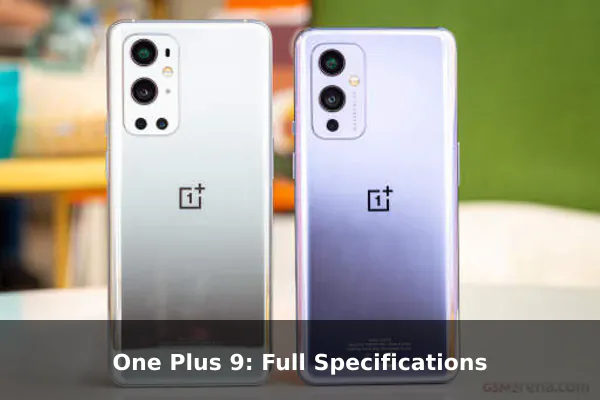
The OnePlus 9 marked the debut of the Hasselblad partnership, focused mainly on colour calibration. Its triple rear setup combines a 48 MP main sensor, a 50 MP ultrawide, and a 2 MP monochrome helper, backed by a dedicated colour spectrum sensor and dual-LED flash. Video tops out at 8K at 30fps, with stabilised 4K capture for more practical shooting. The 16 MP front camera handles selfies and 1080p video. It is a versatile system, though as with any camera phone, results vary by lighting and software tuning.
Battery and Charging
A 4500 mAh battery keeps the OnePlus 9 running through a typical day, and the standout feature is its 65W wired charging, which OnePlus rated at a full charge in about 29 minutes. EU and NA units also added 15W wireless charging. This charging speed is arguably the phone’s most enduring advantage, since even many newer mid-range rivals still charge more slowly. Real-world battery life will naturally depend on age and usage patterns on a used unit.
Connectivity and Extras
Connectivity is well rounded, with 5G across multiple regional bands, Wi-Fi 6, Bluetooth 5.2 with aptX HD, NFC, and USB Type-C 3.1 with OTG. Positioning covers GPS, GLONASS, BDS, and Galileo. An under-display optical fingerprint sensor handles security, and stereo speakers with 24-bit/192kHz Hi-Res audio support round out the media experience. There is no 3.5mm headphone jack, no microSD expansion, and no FM radio, so wireless audio and cloud storage are the intended path.
Who Should Buy the OnePlus 9
The OnePlus 9 suits buyers hunting for flagship-grade speed, a smooth 120Hz display, and very fast charging without paying current flagship prices. It is a strong pick on the used or clearance market for value-focused shoppers and OnePlus fans who prefer a clean interface. Those who need long-term software updates, guaranteed water resistance, or the very latest camera processing may prefer a newer device instead.
Conclusion
The OnePlus 9 remains a capable former flagship that blends a fast Snapdragon 888, a bright 120Hz AMOLED screen, class-leading 65W charging, and a Hasselblad-tuned camera into a light, approachable package. Its main compromises are limited future software support, region-dependent water resistance, and the absence of expandable storage. For anyone seeking flagship performance at a sharply reduced price, it is an easy recommendation on the second-hand market — just verify the specific model variant and battery health before buying.
References
- OnePlus 9 Official Specs – Primary manufacturer specification page for OnePlus 9 dimensions, display, chipset, memory, storage, battery, cameras, connectivity bands, sensors, ports, and in-box contents.
- OnePlus User Manuals – Official OnePlus support documentation source for device manuals and usage details that can corroborate hardware features and package documentation.
- Qualcomm Snapdragon 888 5G Mobile Platform – Primary chipset source for the Snapdragon 888 platform used in the OnePlus 9, useful for verifying CPU/GPU platform and modem capability claims.
- GSMArena OnePlus 9 Specifications – Established mobile specifications database useful as an independent cross-check for model variants, launch timing, dimensions, display, camera, battery, and connectivity details.
- FCC Equipment Authorization System (fcc.gov) – Official US regulator database useful for verifying US variant filings, model identifiers, RF exposure/SAR documents, and radio certification details when needed.
