
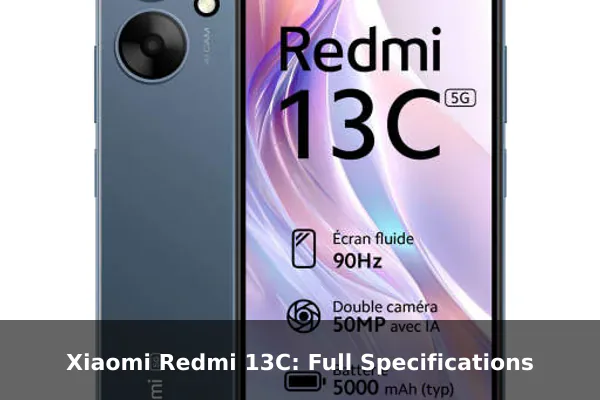
The Xiaomi Redmi 13C is an entry-level 4G Android phone built around practical basics: a large 90Hz display, a 5000mAh battery, expandable storage, dual SIM support, and a 50MP main camera. It was announced and released on November 10, 2023, and it remains most relevant for buyers who care more about everyday reliability than premium materials or 5G speed.
This specs-focused article looks at the Redmi 13C from a value-first angle, highlighting where its hardware still makes sense, where the compromises are clear, and what type of user should consider it before moving to newer Redmi, Poco, Samsung Galaxy A, or Realme alternatives.
Full Specifications
Network
| Technology: | GSM / HSPA / LTE |
| 2G bands: | GSM 850 / 900 / 1800 / 1900 |
| 3G bands: | HSDPA 850 / 900 / 2100 |
| 4G bands: | 1, 3, 5, 7, 8, 20, 28, 38, 40, 41 |
| Speed: | HSPA, LTE |
Launch
| Announced: | 2023, November 10 |
| Status: | Available. Released 2023, November 10 |
Body
| Dimensions: | 168 x 78 x 8.1 mm (6.61 x 3.07 x 0.32 in) |
| Weight: | 192 g (6.77 oz) |
| SIM: | Nano-SIM + Nano-SIM |
Display
| Type: | IPS LCD, 90Hz, 450 nits (typ), 600 nits (HBM) |
| Size: | 6.74 inches, 109.7 cm2 (~83.7% screen-to-body ratio) |
| Resolution: | 720 x 1600 pixels, 20:9 ratio (~260 ppi density) |
| Protection: | Corning Gorilla Glass |
Platform
| OS: | Android 13, MIUI 14 |
| Chipset: | Mediatek MT6769Z Helio G85 (12 nm) |
| CPU: | Octa-core (2×2.0 GHz Cortex-A75 & 6×1.8 GHz Cortex-A55) |
| GPU: | Mali-G52 MC2 |
Memory
| Card slot: | microSDXC (dedicated slot) |
| Internal: | 128GB 4GB RAM, 128GB 6GB RAM, 128GB 8GB RAM, 256GB 4GB RAM, 256GB 8GB RAM |
| eMMC 5.1 |
Main Camera
| Dual: | 50 MP, f/1.8, 28mm (wide), PDAF 2 MP, f/2.4, (macro) 0.08 MP (auxiliary lens) |
| Features: | LED flash, HDR |
| Video: | 1080p@30fps |
Selfie camera
| Single: | 8 MP, f/2.0 |
| Features: | HDR |
| Video: | 1080p@30fps |
Sound
| Loudspeaker: | Yes |
| 3.5mm jack: | Yes |
Comms
| WLAN: | Wi-Fi 802.11 a/b/g/n/ac, dual-band |
| Bluetooth: | 5.3, A2DP, LE |
| Positioning: | GPS, GLONASS, GALILEO, BDS |
| NFC: | Yes (market/region dependent) |
| Radio: | FM radio |
| USB: | USB Type-C 2.0 |
Features
| Sensors: | Fingerprint (side-mounted), accelerometer, compass |
| Virtual proximity sensing |
Battery
| Type: | Li-Po 5000 mAh |
| Charging: | 18W wired, PD |
Misc
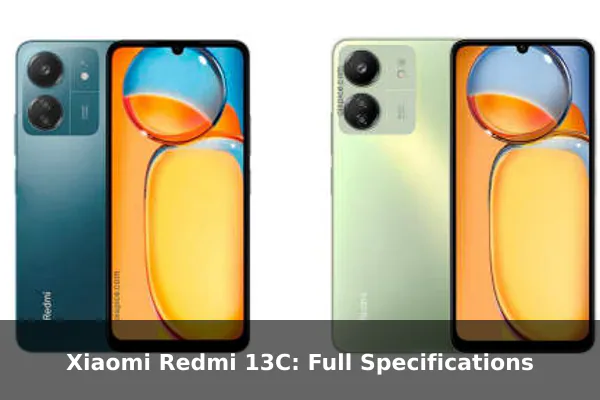
| Colors: | Midnight Black, Navy Blue, Glacier White, Clover Green |
| Models: | 23100RN82L, 23106RN0DA, 23108RN04Y, 2311DRN14I |
| SAR EU: | 0.98 W/kg (head) 0.99 W/kg (body) |
| Price: | € 111.90 / $ 149.99 / £ 104.99 |
Price and Availability
The Xiaomi Redmi 13C offers a compelling combination of features and performance. While the base price is around €112, the actual cost may vary depending on your location and retailer. Below, you’ll find the approximate price of the Xiaomi Redmi 13C converted into various currencies. Please note that these are estimates based on recent exchange rates as of September 16, 2026 and may not reflect the exact price you’ll find at a retailer.
- United States: $129
- Japan: ¥20,031
- United Kingdom: £96
- Australia: A$181
- Canada: C$180
- Taiwan: NT$4,107
- Denmark: kr837
- Saudi Arabia: ﷼484
- South Korea: ₩175,554
- Germany: €112
- Brazil: R$665
- Vietnam: ₫3.345.582
- Kenya: KSh 16,777
- India: ₹12,383
- Indonesia: Rp 2.280.610
- Nigeria: ₦174,790
- Pakistan: ₨35,855
- Philippines: ₱8,113
- Bangladesh: ৳১৫,৯২২
Value Positioning
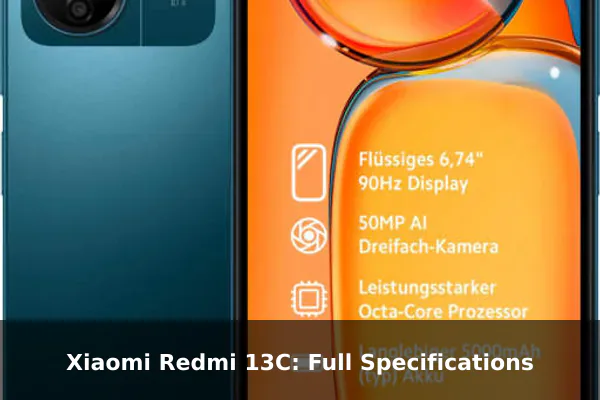
The Redmi 13C sits in Xiaomi’s budget Redmi line, so its strongest argument is not raw power or luxury design. Its appeal is the combination of a large screen, familiar Android software, long battery capacity, and useful everyday hardware at an accessible price point. The dedicated microSDXC slot is especially important for value buyers because it lets users expand storage without giving up the second SIM slot. That is a practical advantage for students, prepaid users, delivery riders, and anyone keeping separate personal and work numbers.
Its value should be judged with realistic expectations. This is a 4G phone with eMMC 5.1 storage and a Helio G85 chipset, so it is aimed at messaging, browsing, video streaming, social apps, navigation, light photography, and casual gaming. Buyers who need 5G, higher-end video recording, faster app loading, or a sharper Full HD display should compare it with newer mid-range phones. For basic daily use, though, the Redmi 13C covers the core checklist without pretending to be a performance flagship.
Design and Handling
The phone measures 168 x 78 x 8.1 mm and weighs 192 g, which makes it a fairly large handset. That size is expected because of the 6.74-inch screen and 5000mAh battery, but one-handed use will not be ideal for everyone. The slim 8.1 mm profile helps it feel less bulky, while the flat-sided Redmi styling gives it a clean and simple look.
Color options include Midnight Black, Navy Blue, Glacier White, and Clover Green. Those finishes give Xiaomi enough range to cover conservative and brighter tastes without changing the underlying hardware. A side-mounted fingerprint sensor is a sensible choice at this price because it is quick to reach and usually more consistent than low-cost under-display readers. The Nano-SIM + Nano-SIM setup also reinforces the phone’s practical identity.
Display Experience
The 6.74-inch IPS LCD is one of the Redmi 13C’s headline features. It supports up to 90Hz refresh rate, which can make scrolling and supported app animations feel smoother than basic 60Hz budget phones. Brightness is listed at 450 nits typical and 600 nits in high brightness mode, so it should be comfortable indoors and usable outdoors, although it will not match the punch or contrast of AMOLED panels.
The main compromise is resolution. At 720 x 1600 pixels and about 260 ppi, the screen prioritizes size and battery efficiency over sharpness. Text, icons, and video are perfectly serviceable for casual use, but buyers who read a lot of small text or watch high-resolution content may notice the softer image. Corning Gorilla Glass protection is a welcome durability point, especially for a phone likely to be used without much pampering.
Performance and Storage
The Redmi 13C uses the MediaTek Helio G85, a 12 nm chipset with two Cortex-A75 performance cores at 2.0GHz and six Cortex-A55 efficiency cores at 1.8GHz, paired with Mali-G52 MC2 graphics. In everyday terms, that means the phone is better suited to steady basic tasks than heavy multitasking. Social apps, maps, browser tabs, music streaming, and common messaging apps should be within its comfort zone, while demanding 3D games will need modest graphics settings.
Memory options range from 4GB to 8GB RAM, with 128GB or 256GB internal storage depending on variant. The storage type is eMMC 5.1, which is slower than UFS storage found in pricier devices. That matters most when installing apps, switching between heavier apps, or loading large games. For the best long-term experience, the 6GB or 8GB RAM variants are easier to recommend than the base 4GB model.
Camera Expectations
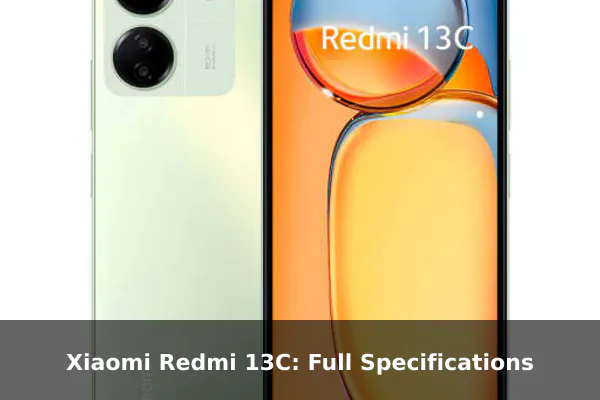
The rear camera system is led by a 50MP f/1.8 wide camera with PDAF, accompanied by a 2MP macro camera and an auxiliary lens. The important part is the main sensor: it is the camera most users will rely on for daytime shots, documents, food photos, and casual portraits. HDR and LED flash are included, and rear video tops out at 1080p at 30fps.
The macro and auxiliary cameras should be treated as supporting hardware rather than major buying reasons. A 2MP macro camera can be fun in bright light, but it is limited in detail and usefulness. The 8MP front camera with HDR and 1080p video is enough for selfies and video calls, though buyers should not expect flagship-level low-light performance or advanced stabilization. The Redmi 13C is a practical camera phone, not a creator-focused one.
Battery and Charging
The 5000mAh Li-Po battery is one of the safest reasons to consider the Redmi 13C. Combined with a 720p-class display, efficient everyday hardware, and 4G connectivity, the capacity should support long mixed-use days for typical users. Battery life will vary with brightness, signal quality, gaming, and video streaming, but the hardware profile is clearly tuned for endurance.
Charging is listed at 18W wired with USB Power Delivery support. That is useful, but not especially fast by modern Xiaomi standards. The phone is better for people who charge overnight or top up during downtime than for users who expect very rapid charging before leaving the house. USB Type-C 2.0 is included, which is now the expected baseline and a welcome improvement over older microUSB budget devices.
Software and Daily Use
The Redmi 13C ships with Android 13 and MIUI 14. MIUI gives Xiaomi users a familiar feature set, including customization options, utility apps, and battery controls. The experience should feel approachable for existing Redmi owners, especially those upgrading from older Redmi 9, Redmi 10, or entry-level Poco models.
As always with budget Android phones, software expectations should be measured. The phone’s long-term smoothness will depend on the chosen RAM variant, installed apps, storage remaining, and future update availability by region. The side fingerprint scanner, accelerometer, compass, and virtual proximity sensing cover the everyday sensor basics, but there is no indication of premium extras such as an IP rating or wireless charging in the supplied source data.
Connectivity and Practical Extras
Connectivity is broad for a 4G-focused phone. The Redmi 13C supports GSM, HSPA, and LTE, with 4G bands including 1, 3, 5, 7, 8, 20, 28, 38, 40, and 41. Wi-Fi 802.11 a/b/g/n/ac with dual-band support, Bluetooth 5.3, GPS, GLONASS, GALILEO, and BDS are also listed. NFC is available depending on market or region, so buyers should verify local units if contactless payments matter.
The 3.5mm headphone jack and FM radio are meaningful extras in this segment. Many budget buyers still use wired earphones, and FM radio can be useful where mobile data is expensive or unreliable. The combination of dual SIM, expandable storage, USB-C, headphone jack, and 5000mAh battery makes the Redmi 13C a practical daily companion rather than a spec-sheet showpiece.
Who Should Buy the Redmi 13C?
The Redmi 13C makes the most sense for buyers who want an affordable Android phone for calls, messaging, banking apps, social media, online classes, light gaming, YouTube, and navigation. It is also a reasonable secondary phone because it has dual SIM support, expandable storage, strong battery capacity, and a large display. For parents buying a first smartphone for a teenager, or for users replacing an older 4G device, it checks many of the right boxes.
It is less suitable for buyers who want a compact phone, 5G connectivity, AMOLED contrast, crisp Full HD resolution, fast storage, advanced cameras, or high-performance gaming. In those cases, spending more on a newer Redmi Note, Poco, Samsung Galaxy A, or Realme model may age better. The Redmi 13C is best understood as a budget utility phone with a big screen and strong battery fundamentals.
References
- Xiaomi Malaysia Redmi 13C official specifications
- MediaTek Helio G85 product information
- PhoneArena Xiaomi Redmi 13C specifications
- Source catalog entry from tampungspekhp.berkasdrive.com
Conclusion
The Xiaomi Redmi 13C is a sensible budget 4G smartphone with a large 90Hz display, expandable storage, dual SIM support, a 50MP main camera, USB-C, a headphone jack, and a dependable 5000mAh battery. Its limits are equally clear: 720p resolution, eMMC storage, modest secondary cameras, and no 5G. Choose it if you want an affordable everyday Redmi with strong basics; skip it if display sharpness, gaming power, or future-ready connectivity are top priorities.
